
Why Your Heat Pump Runs in Defrost Mode
Cool mornings reach Central Florida sooner than most homeowners expect, and the first real cold front usually brings the first round of worried phone calls about a heat pump behaving strangely. The outdoor unit stops mid cycle, the fan goes silent, a loud whoosh comes from inside the cabinet, and a cloud of steam rolls off the top of the machine while water drips onto the pad below. That whole sequence looks like a breakdown in progress, yet in the vast majority of cases it is completely normal operation working exactly as the manufacturer designed it. Your heat pump is running a defrost cycle, and that cycle exists to clear frost off the outdoor coil before the ice grows thick enough to shut down heat production entirely. Once you understand what defrost mode actually does, how long it should last, and what a healthy cycle looks and sounds like, you gain a reliable way to separate routine operation from a genuine equipment problem that needs a technician. This guide covers the mechanics behind the cycle, the warning signs that point to a real failure, and the maintenance that keeps your system heating your home through every cold snap between November and March.
What Defrost Mode Is and Why Your Heat Pump Runs It
A heat pump does not create heat the way a furnace does; it moves heat from one place to another using refrigerant, a compressor, and two coils. During the heating season that process runs in reverse compared to summer, so the outdoor coil becomes the cold side of the system and pulls warmth out of the outside air even when that air feels frigid to you. To make that transfer happen, the refrigerant inside the outdoor coil has to sit well below the outdoor temperature, which frequently means the coil surface drops below freezing. Central Florida carries heavy humidity almost year round, so when that moist air passes over a coil sitting at 25 or 28 degrees, the moisture condenses and freezes on the fins almost immediately. A thin layer of frost is harmless, but a thick layer acts like a blanket and blocks the airflow the system depends on. Defrost mode is the built in answer to that problem, and every properly functioning air source heat pump on the market uses some version of it.
How Your Heat Pump Decides to Enter Defrost Mode
Your system does not guess when frost has formed, and it does not rely on you to notice ice on the coil and press a button. Modern equipment uses a defrost control board paired with a temperature sensor clipped directly onto the outdoor coil, and often a second sensor reading the ambient outdoor air temperature. When the coil sensor reports a temperature low enough to indicate frost conditions, usually somewhere in the low 30s or below, the board starts watching the clock and comparing the two readings. Older timed systems simply counted compressor run time and forced a defrost cycle every 30, 60, or 90 minutes any time the coil sat below the trigger point, regardless of how much frost had actually accumulated. Newer demand defrost boards are smarter, because they compare the coil temperature against the outdoor air temperature and only call for a cycle when the spread between the two readings shows real ice buildup. That difference matters for your power bill, since unnecessary defrost cycles waste energy and put extra wear on the reversing valve and compressor. Homeowners with equipment more than fifteen years old often notice defrost happening far more often than their neighbors with newer systems, and that timed logic is usually the reason.
Outdoor conditions drive how frequently the cycle runs, and Florida weather creates a specific pattern that surprises people who moved here from colder states. Frost forms fastest in the range between roughly 30 and 45 degrees combined with high relative humidity, and that description fits a Central Florida December morning almost perfectly. Bitter cold, dry air actually produces less frost than damp air hovering near freezing, so a heat pump in Ocoee or Clermont can defrost more often on a 38 degree foggy morning than a heat pump in a northern state does at 15 degrees. Rain followed by a temperature drop overnight creates the same effect, because standing moisture on the coil freezes the moment the compressor starts pulling heat out of it. You may also see the cycle run several times during a single morning and then not at all during the afternoon once the sun warms the air above the frost point. None of that variation signals a problem by itself; it simply reflects the weather your equipment is fighting at that hour.
The thermostat plays a supporting role in the process, and its settings influence how hard your system works in the first place. A thermostat set to a comfortable steady temperature allows the compressor to run long, efficient cycles that keep the coil clear more of the time. Large temperature swings, deep overnight setbacks, and repeated manual adjustments force the equipment into long recovery runs in the coldest part of the day, which is exactly when frost forms fastest. Some thermostats also carry a setting that locks out the compressor below a certain outdoor temperature and switches the home entirely to auxiliary heat, and an incorrectly configured lockout can drive your electric bill up dramatically without you ever knowing why. Wiring problems between the thermostat and the outdoor unit can also interrupt the defrost signal and leave the coil iced over. If your thermostat has ever been replaced by a previous owner or a handyman, having a technician verify the configuration is worth the visit. Want a thermostat that manages your heat pump correctly through cold weather? Click here for our thermostat service.
What Happens Inside the Unit During Defrost Mode
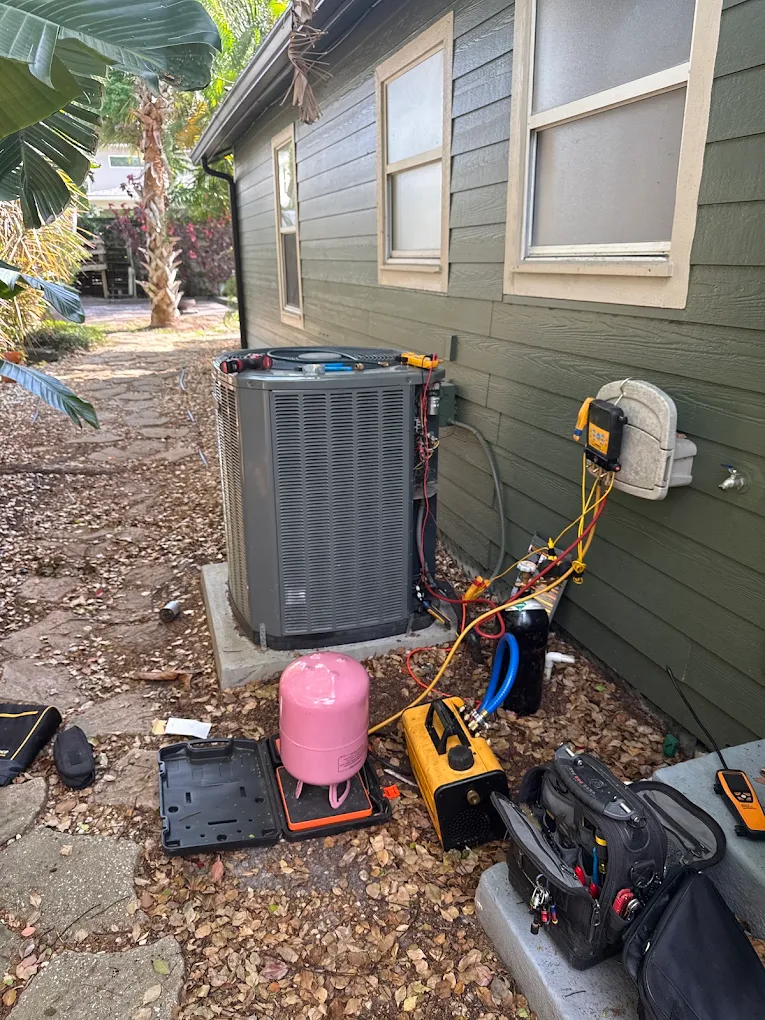
The most important thing to understand about defrost mode is that your heat pump temporarily switches itself into air conditioning mode to melt the ice off the outdoor coil. A component called the reversing valve shifts position, sending hot compressed refrigerant gas straight out to the outdoor coil instead of into your home, and that heat melts the frost from the inside out. The loud whoosh or shudder you hear at the start and end of the cycle is that valve shifting under pressure, and it is one of the most common sounds homeowners mistake for a malfunction. At the same moment, the outdoor fan shuts completely off, because blowing cold outside air across a coil you are trying to warm would defeat the entire purpose. That is why the unit appears to be running while the fan sits perfectly still, a combination that looks broken but is entirely intentional. The melting ice turns to water, runs off the coil, and drains out the bottom of the cabinet onto the pad.
Because the system is briefly cooling instead of heating, your indoor air handler would blow cold air into your living space if nothing counteracted it. To prevent that, the control board energizes the auxiliary heat, which in almost every Florida home means electric resistance heat strips mounted inside the air handler. Those strips warm the air passing over them so the supply registers keep delivering comfortable air throughout the cycle, and that is why your thermostat often flashes an auxiliary heat or emergency heat indicator during defrost. Heat strips draw a significant amount of electricity compared to the compressor, so a system defrosting far more often than necessary directly inflates your winter power bill. This is also why the air from your vents can feel slightly cooler than usual for a few minutes even though the system is working correctly. A brief drop in supply air temperature during defrost is normal; sustained cold air blowing for twenty minutes is not.
The steam rising off the outdoor unit alarms more homeowners than any other part of the process, and it is worth explaining plainly. When hot refrigerant hits a coil covered in ice on a cold morning, the melting water flashes into visible vapor that pours off the cabinet and drifts across the yard. From a distance it genuinely looks like smoke, and we have been called out for suspected fires that turned out to be textbook defrost cycles. Real smoke smells like burning and does not dissipate quickly, while defrost vapor is odorless and disappears within seconds of the cycle ending. If you ever smell burning plastic, hot electrical insulation, or anything acrid coming from the equipment, shut the system off at the thermostat and the breaker and call for service immediately. Absent that smell, vapor rolling off your heat pump on a January morning is your system doing precisely what it was engineered to do.
How Long Heat Pump Defrost Mode Should Last
A healthy defrost cycle is short, and the timing gives you the clearest indication of system health without any tools at all. Most cycles run between two and ten minutes from the first whoosh to the moment the outdoor fan spins back up and normal heating resumes. The control board terminates the cycle as soon as the coil sensor reads a temperature warm enough to confirm the ice is gone, generally somewhere between 55 and 70 degrees depending on the manufacturer. Every defrost board also carries a maximum time limit, usually ten minutes, that forces the system back into heating even if the sensor never reaches its termination temperature. That safety limit exists to protect the equipment, but repeatedly hitting it points to a problem worth investigating. Cycles that consistently run the full ten minutes and end with ice still visible on the coil indicate that something is preventing the system from clearing itself properly.
Frequency matters just as much as duration, and it follows a pattern tied to the weather outside your window. On a genuinely cold and damp Central Florida morning, seeing the cycle run once every 45 minutes to an hour and a half falls well within normal range for most equipment. A system entering defrost every fifteen or twenty minutes hour after hour is working far harder than it should, and that pattern almost always traces back to low refrigerant charge, a dirty coil, a failing sensor, or a control board reading conditions incorrectly. On the opposite end, a heat pump that never enters defrost mode despite obvious ice on the coil has a defrost system that has stopped functioning altogether. Both extremes cost you money and shorten the life of the compressor. Paying attention to the rhythm across a few cold mornings tells you more than any single observation.
Recovery after the cycle is the third thing to watch, and it should be immediate and complete. When defrost ends, the reversing valve shifts back with another whoosh, the outdoor fan restarts, the auxiliary heat drops out within a minute or two, and warm air returns to your vents. The outdoor coil should look clean and clear, with water draining away from the base of the unit rather than pooling underneath it and refreezing. Ice accumulating on the pad, on top of the cabinet, or around the base of the unit means the melted water is not draining properly, and that standing ice will eventually damage the fan blade or the coil fins. Poor drainage often comes from a unit set too low to the ground, a clogged base pan, or landscaping that traps water against the equipment. Catching that early costs a service call; ignoring it can cost a compressor. Need your heat pump checked before the first hard cold front? Click here for our heat pump service.
Signs Your Heat Pump Defrost Mode Is Not Working Right
Normal defrost operation is loud, steamy, and brief, and it resolves itself without any help from you. Failed defrost operation looks different in ways most homeowners can spot from the driveway once they know what separates the two. Ice that survives the cycle, cycles that repeat constantly, weak heat that never quite satisfies the thermostat, and an electric bill that jumps far beyond the previous winter all point toward a defrost system in trouble. The tricky part is that a heat pump with a broken defrost function usually still produces some heat, so the failure hides behind auxiliary heat strips that quietly run for hours and drive your usage through the roof. Many homeowners never realize anything is wrong until the bill arrives or the outdoor unit becomes a solid block of ice. Catching the problem early protects both the compressor and your budget.
Ice That Stays on the Coil After Defrost Mode Ends
The single clearest failure sign is ice that remains after a defrost cycle finishes, and it is easy to check with a flashlight on any cold morning. Walk out to the outdoor unit and look at the coil, which is the finned surface wrapping around the outside of the cabinet, along with the fan blade at the top. A light coating of frost between cycles is expected and harmless in cold, damp weather. Solid white ice covering large sections of the coil, ice bridging across the fins, or a sheet of ice encasing the entire cabinet like a shell means the defrost cycle is not clearing the coil. At that point airflow through the coil has collapsed, the system cannot absorb heat from the outside air, and your home is being warmed almost entirely by expensive backup heat. Ice on top of the unit and around the fan blade is especially serious, because a spinning blade contacting ice can destroy the motor and throw debris through the coil.
Several distinct failures produce this symptom, and a technician diagnoses the difference by reading pressures, temperatures, and electrical signals rather than guessing. Low refrigerant charge caused by a leak drops the coil temperature far below normal, which accelerates frost formation faster than any defrost cycle can keep up with. A defrost sensor that has drifted out of calibration or lost contact with the coil reports the wrong temperature and either fails to trigger the cycle or ends it prematurely. A reversing valve that sticks partway between positions cannot deliver hot gas to the outdoor coil, so the cycle initiates and accomplishes nothing at all. A failed outdoor fan motor causes ice buildup during normal heating even when the defrost function itself works fine. Each of these requires a different repair, and each gets worse the longer the system runs in that condition.
Never chip, scrape, or pry ice off the coil with a screwdriver, hammer, or any other tool, because the aluminum fins and copper tubing underneath puncture with almost no force. A single punctured tube releases the entire refrigerant charge and turns a moderate repair into a major one. If you need to clear ice before a technician arrives, switch the thermostat to emergency heat, which shuts off the compressor and runs the home on heat strips alone, then let the ice melt on its own or use plain warm water poured gently over the coil. Emergency heat is expensive to run, so treat it as a short bridge to a service appointment rather than a solution. Turning the system off entirely also works if the weather is mild enough for your household. Either way, get the underlying cause diagnosed rather than melting the ice and hoping it stays gone.
Heat Pump Defrost Mode Running Too Often
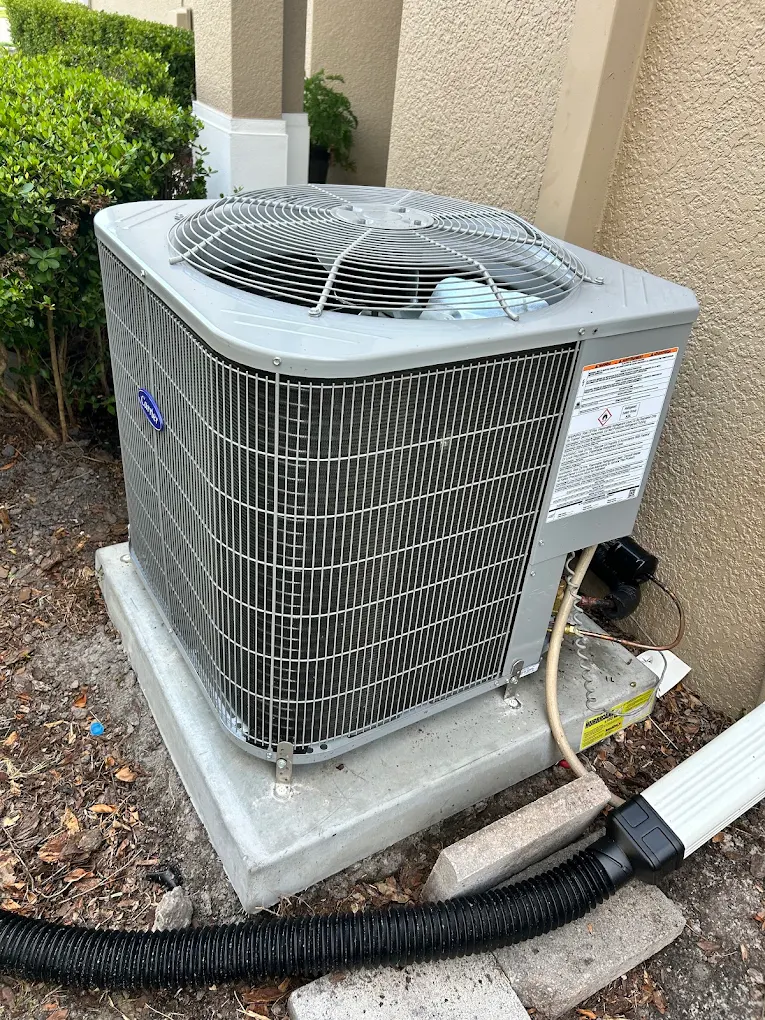
Excessive defrost cycling wastes electricity every single time it happens, because each cycle stops heat delivery and fires up resistance heat strips that consume several times the power of the compressor. A system cycling into defrost every fifteen minutes across an entire cold morning may be spending a third of its run time producing no useful heat at all. Homeowners usually notice the pattern as a house that struggles to hold temperature paired with a bill that climbed hundreds of dollars over the same month last year. The outdoor unit stopping and starting constantly, with repeated whooshing sounds and clouds of vapor, is the audible version of the same problem. Timed defrost boards on older equipment cause this behavior by design, forcing cycles on a fixed schedule regardless of actual frost conditions. Upgrading the control to a demand defrost board is often possible and pays for itself quickly on a system that still has good years left in it.
Airflow restrictions on the indoor side create the same excessive cycling from a completely different direction. A clogged air filter, crushed flexible ductwork, closed supply registers, or a dirty indoor coil all reduce the volume of air moving across the indoor coil during heating. That reduced airflow lowers system pressures, drops the outdoor coil temperature further than the design intends, and produces frost faster than the equipment can manage. Homeowners often make this worse by closing vents in unused rooms, which seems efficient but actually starves the system and raises operating cost. Duct leakage in a hot attic bleeds off heated air before it ever reaches your rooms, forcing longer run times in the coldest conditions. Checking your filter monthly during heating season is the simplest maintenance step available to you, and it prevents a surprising share of the calls we run. Think restricted ductwork is driving up your heating bill? Click here for our air duct service.
The physical location and condition of the outdoor unit contribute more than most people expect. Shrubs, fencing, stacked storage, or mulch piled against the cabinet block the airflow the coil needs and trap moisture right where you least want it. Manufacturers generally call for at least two feet of clear space around all sides of the unit and several feet of open air above it. Landscaping that has grown in over three or four seasons frequently violates that clearance without anyone noticing the change. A unit sitting in permanent shade on the north side of a home stays colder and damper than one that catches morning sun, which naturally increases defrost frequency during Florida cold snaps. Clearing vegetation, keeping the pad free of leaves, and making sure sprinkler heads never spray the cabinet all reduce how hard the defrost system has to work.
Parts That Fail and Cause Defrost Mode Problems
The defrost control board is the brain of the operation, and it fails in ways that produce very different symptoms depending on which function goes bad. A board with failed timing logic may skip cycles entirely and allow ice to build without limit, or it may trigger constantly and burn energy for no reason. Power surges from Florida thunderstorms damage these boards regularly, and a system that worked perfectly last winter can come out of a long summer with a board that no longer sequences correctly. Boards are generally straightforward to replace once diagnosed, though availability varies by manufacturer and equipment age. A technician confirms the diagnosis by forcing a manual defrost and watching the sequence of operations rather than replacing parts on suspicion. That distinction matters, because a board swap on a system that actually has a refrigerant leak solves nothing and wastes your money.
The defrost sensor, sometimes called a coil thermistor, is a small component that carries enormous influence over system behavior. It clips or bolts directly to a specific spot on the outdoor coil and reports temperature back to the control board continuously. Sensors fail by drifting out of calibration, by losing physical contact with the coil surface, or by developing corroded connections that interrupt the signal. Any of those conditions feeds the board bad information, and the board acts on that information exactly as programmed. A sensor reading warmer than reality prevents defrost from ever starting, while one reading colder than reality triggers cycles that are not needed. Sensors are inexpensive parts, and replacing a failed one often resolves what looked like a major system problem.
The reversing valve deserves special attention because it does the actual work of flipping the system between heating and defrost. It contains a sliding internal component driven by a small electric solenoid coil mounted on the outside of the valve body. The solenoid coil can fail electrically while the valve itself remains perfectly good, and that repair is quick and affordable. The valve body itself can also stick partway between positions, particularly on systems that sat idle through a long Florida summer without exercising the heating mode. A stuck valve shows up as a system that runs constantly without producing warm air, or one that initiates defrost and never clears the ice. Replacing a valve body requires recovering the refrigerant, cutting the old valve out, brazing the new one in, and recharging the system, so it is a repair that belongs with a licensed technician every time.
Why You Need a Heat Pump Defrost Mode Inspection Before Cold Weather
Heat pumps in Central Florida spend nine months of the year in cooling mode, and the heating side of the system sits mostly unused from March through November. That long dormancy is exactly why so many defrost failures surface on the first genuinely cold morning of the season, usually at the worst possible moment. A reversing valve that has not shifted in eight months, a defrost board that took a lightning surge in August, and a sensor with corroded terminals all pass unnoticed until the temperature drops and the system finally asks them to work. An inspection before the season starts catches those problems while the weather is still mild and parts are still readily available. It also verifies the refrigerant charge, which is the single biggest driver of frost buildup and the most common cause of excessive defrost cycling. Spending a small amount on prevention in the fall consistently costs less than an emergency call during a January cold front.
What a Heat Pump Defrost Mode Inspection Covers
A thorough inspection tests the heating side of the system directly instead of assuming it works because cooling worked last summer. The technician forces a manual defrost cycle and watches the entire sequence, confirming that the reversing valve shifts, the outdoor fan stops, the auxiliary heat energizes, and the cycle terminates on the sensor rather than the time limit. Refrigerant pressures and temperatures get measured under heating conditions, which reveals a low charge that cooling mode operation can easily mask. The outdoor coil is inspected for dirt, bent fins, and corrosion from lawn chemicals and salt air, since a restricted coil frosts faster no matter how well the controls function. Electrical connections, capacitor values, contactor condition, and amperage draw all get checked, because weak components fail under the heavier load that cold weather demands.
The indoor side receives equal attention, since airflow problems there create frost problems outside. The blower wheel, indoor coil, filter, and drain get inspected, and the technician confirms that the auxiliary heat strips energize and shut off exactly when they should. Heat strips that stay energized continuously are one of the fastest ways to build an enormous power bill without producing any noticeable comfort improvement. Thermostat wiring and configuration get verified so the system stages correctly between compressor heat and backup heat. Airflow across the indoor coil is measured and compared against the manufacturer specification for that equipment. Small corrections at this stage frequently deliver noticeable improvements in both comfort and monthly cost.
Documentation from the inspection gives you something valuable beyond the visit itself. Recorded pressures, temperatures, and amperage readings create a baseline that makes future diagnosis faster and more accurate. Comparing this year’s numbers against last year’s often reveals a slow refrigerant leak or a degrading component long before it becomes a failure. Manufacturer warranties on heat pumps also require documented annual maintenance, and missing records can cost you coverage on an expensive part. Keeping a simple file of service reports protects both your equipment and your warranty claim if you ever need it.
The Cost of Ignoring Heat Pump Defrost Mode Problems
The financial damage from a broken defrost system starts with your electric bill and builds quietly over weeks. When the compressor cannot pull heat from an iced coil, resistance heat strips carry the entire heating load, and those strips consume several times the power that a functioning heat pump uses for the same amount of comfort. Households routinely see winter bills climb by two hundred dollars or more per month before anyone connects the increase to the outdoor unit. That money buys no additional comfort, and it continues bleeding out for as long as the problem goes unaddressed. A repair that costs a few hundred dollars often pays for itself within a single billing cycle.
Equipment damage is the larger risk, and it accumulates faster than most homeowners realize. A compressor running against a fully iced coil operates far outside its designed pressure range, and liquid refrigerant returning to the compressor destroys the internal components over time. Ice contacting a spinning fan blade cracks the blade, bends the motor shaft, and slings fragments through the coil fins. Water pooling and refreezing under the unit lifts the base pan and stresses the refrigerant lines. Compressor replacement on a modern heat pump frequently costs enough that homeowners choose full system replacement instead, which turns a small repair into a major expense.
Timing works against you as well, since defrost failures reveal themselves during cold weather when demand for service peaks across the region. Every heating contractor in Central Florida runs a packed schedule during a cold front, parts distributors run short on common components, and emergency rates apply after hours and on weekends. A problem found during a calm October appointment gets fixed on a normal schedule at a normal price. The same problem discovered on a 32 degree January morning means waiting in a cold house behind dozens of other calls. Scheduling ahead of the season is the simplest way to avoid that situation entirely.
Why Choose Legion Cooling for Heat Pump Defrost Mode Service
Legion Cooling is a family owned company operating out of Winter Garden, and we serve homeowners across Horizon West, Windermere, Ocoee, Clermont, Winter Park, and the surrounding Central Florida communities. Our technicians are licensed and insured, and they diagnose heat pump defrost problems by testing the system properly rather than swapping parts and hoping something changes. We explain what we find in plain language, show you the readings, and lay out your options before any work begins. Faith drives how we operate, and that shows up in honest recommendations even when the honest answer is that your system does not need the repair someone else quoted.
Our quotes are straightforward with no hidden fees added after the fact, and we tell you the price before we start rather than after we finish. Financing is available for larger repairs and system replacements, so a failed compressor in the middle of winter does not have to become a financial emergency. We stock the components that fail most often on Central Florida heat pumps, which means many repairs get completed on the first visit instead of stretching across several days. Being locally owned means we answer to our neighbors, and our reputation in these communities is worth far more to us than any single invoice.
Getting it done right every time is the standard we hold ourselves to, and that applies to a routine seasonal inspection just as much as a full system installation. We treat your home with respect, clean up completely, and stand behind the work we perform. If your outdoor unit is icing over, cycling constantly, or blowing cool air when it should be heating, we can tell you exactly what is happening and what it will take to fix it. Ready to schedule service before the next cold front? Click here to see all of our HVAC services. Call Legion Cooling at (321) 316-2422 or email info@legioncooling.com to book your appointment.