How to Stay Warm During a Florida Cold Front
Florida winters are short, but they are not gentle when a strong cold front pushes through Central Florida. A front can drop the temperature more than 25 degrees in a single afternoon, and the wind that follows it makes a 45 degree night feel far colder inside a home built to shed heat rather than hold it. Most homes in Winter Garden, Windermere, and Clermont run a heat pump or an air handler with electric heat strips, and those systems sit idle for eight or nine months before they are suddenly asked to run all night. That long stretch of inactivity is exactly why so many heating calls come in during the first cold snap of the season. Staying warm here is less about buying a bigger system and more about making sure the one you already own is clean, sealed, and set correctly before the front arrives. Small problems that hide during mild weather show up immediately when the outdoor temperature falls into the 30s. This guide walks through how Florida heating systems actually produce heat, what you can do at home to hold that heat inside, and when it is time to call a licensed technician instead of waiting it out under an extra blanket.
How Your Heating System Keeps You Warm During a Florida Cold Front
Understanding what your equipment is doing makes it much easier to stay warm during a Florida cold front without running up a painful power bill. Central Florida homes are almost never heated the way homes are heated in Ohio or Michigan, and the differences matter. Instead of a large gas furnace burning fuel in a basement, most local homes rely on a heat pump that moves heat rather than creating it, backed up by electric resistance heat that only runs when the outdoor temperature drops far enough. Some homes, especially older properties and certain custom builds, do use a gas furnace, and those systems have their own maintenance needs and safety concerns. Your thermostat quietly decides which of those heat sources runs and for how long, which means a single wrong setting can cost you real money over the course of one cold week. Knowing which system you own tells you what to expect when the front hits.
Heat Pumps and Staying Warm During a Florida Cold Front
A heat pump is the most common heating system in Orange, Lake, Osceola, and Seminole counties, and it is the same outdoor unit that cools your home all summer. When you switch the thermostat to heat, a reversing valve inside the outdoor unit changes the direction of refrigerant flow so the system pulls heat out of the outdoor air and releases it inside your home. That sounds strange to anyone who has stood outside on a 40 degree morning, but there is usable heat energy in air well below freezing, and a heat pump is very good at extracting it. Because the system moves existing heat instead of generating it, a heat pump delivers far more warmth per dollar of electricity than any electric heater you can buy at a hardware store. The trade off is that the colder the outdoor air becomes, the less heat is available to capture, so output gradually falls as the front settles in. In Central Florida that trade off almost always works in your favor, since our coldest nights are still mild compared to most of the country. A properly sized and maintained heat pump will keep a Winter Garden home comfortable through the vast majority of cold fronts we see.
During a cold front you may notice your heat pump doing things that seem alarming but are completely normal. Frost builds on the outdoor coil when outdoor air is cold and damp, so the system runs a defrost cycle every so often to melt that frost off the coil. When defrost starts, the outdoor fan stops, the unit briefly switches back to cooling mode to warm the outdoor coil, and steam rolls off the top of the cabinet like the unit is on fire. It is not. During that same cycle your electric heat strips usually energize so the air coming out of your vents does not feel cold, and the whole event typically lasts a few minutes before normal heating resumes. Loud whooshing or clunking from the reversing valve during that switch is also expected and does not mean something broke. What is not normal is a unit that stays covered in ice for hours, defrosts constantly, or never produces warm air at all.
Air temperature at the supply vents is another place homeowners get worried without cause. A gas furnace can push air out at 120 degrees or more, but a heat pump in heating mode typically delivers air somewhere in the 90s, which feels lukewarm against skin that is already 98 degrees. That gentler air is by design, and it keeps the home comfortable through longer, steadier run times rather than short blasts of very hot air. Long run cycles during a cold snap are a sign the system is working correctly, not a sign it is struggling. You should be concerned when the air feels genuinely cool, when the system runs continuously and the indoor temperature still falls behind the thermostat setting, or when the unit trips a breaker. Those symptoms often point to a refrigerant charge problem, a failed reversing valve, a bad defrost board, or a compressor that is no longer pumping the way it should. Need heat pump service before the next front rolls in? Click here for our heat pump service.
Furnaces and Electric Heat Strips During a Florida Cold Front
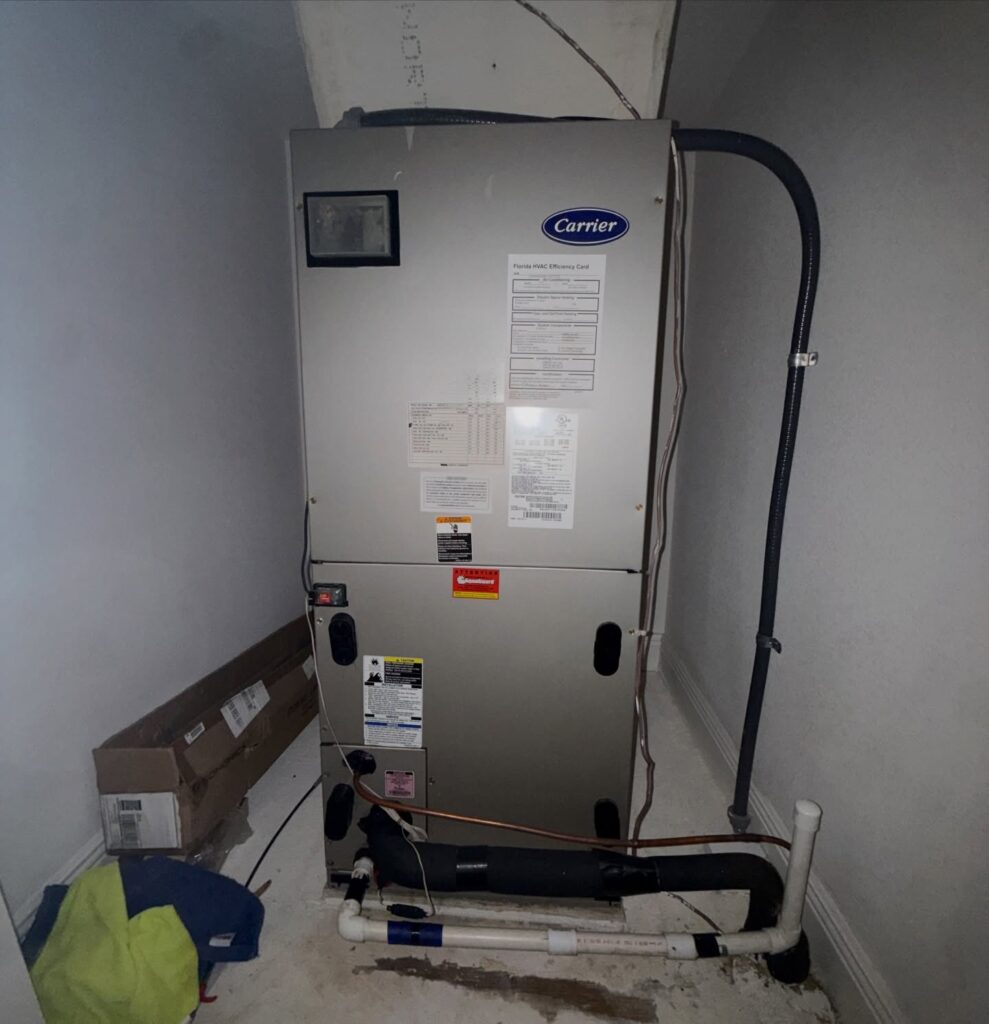
Electric heat strips, often called auxiliary heat or backup heat, live inside the indoor air handler and work like a giant toaster element. When outdoor temperatures fall below the point where the heat pump alone can satisfy the thermostat, the control board brings those strips on to make up the difference. They warm the home quickly and reliably, and they also draw a very large amount of electricity compared to the compressor. A typical strip package pulls several times the power of the heat pump for the same amount of heat, which is why one long cold snap can double a monthly power bill. This is normal operation and not a malfunction, but it is a strong argument for making sure the heat pump side of the system is healthy so the strips only run when they are truly needed. A common and expensive fault is a heat pump that has quietly stopped heating while the strips carry the entire load, since the home still feels warm and nothing seems wrong until the bill arrives.
Homes with a gas furnace have a different set of considerations before a cold front. The furnace ignites gas at a burner assembly, transfers that heat through a metal heat exchanger, and vents combustion byproducts outside through a flue. When a furnace sits unused from March to November, dust settles on the burners, spiders build webs inside the flame sensor area, and the ignitor grows brittle with age. The first cold night is when a weak ignitor finally fails or a dirty flame sensor causes the furnace to light and then shut down seconds later. A cracked heat exchanger is the more serious concern, because it can allow combustion gases including carbon monoxide to mix with the air moving through your ducts. Every home with a gas appliance should have working carbon monoxide detectors on each level, tested at the start of the heating season. If you want your gas system checked before the temperature drops, click here for our furnace service.
A faint burning smell during the first heating cycle of the season is one of the most common calls we get, and it is usually harmless. Dust that has collected on the heat strips or the heat exchanger burns off as those surfaces reach operating temperature, and the odor typically clears within 15 to 30 minutes of runtime. Running the system for an hour on a mild afternoon before the front arrives gets that out of the way when you are able to open windows. The smell you should never ignore is a sharp electrical odor, a hot plastic smell, or any smell of gas near the equipment. Those point toward failing wiring, an overheating strip package, a bad contactor, or a gas leak, and they call for shutting the system down and getting a technician out. Persistent burning odors that last for days are also worth a service call, since they often trace back to a restricted filter and an air handler that is overheating on its limit switch.
Thermostat Settings That Keep You Warm During a Florida Cold Front
Your thermostat controls the cost of staying warm during a Florida cold front more than any other single factor. The most expensive habit homeowners have is bumping the setting up by 8 or 10 degrees at once, expecting the house to warm faster. On nearly every heat pump system, a large gap between the room temperature and the setting tells the control board to bring on the electric heat strips immediately, so that big jump is a direct order to run the most costly heat source you own. Raising the temperature by 2 degrees at a time and giving the system 30 minutes to catch up keeps the heat pump doing the work. The house reaches the same comfortable temperature; you simply pay far less to get there. During a multiple day cold snap, holding a steady setting also beats deep nightly setbacks for the same reason.
The emergency heat setting is widely misunderstood and rarely the right choice. Selecting emergency heat locks out the compressor entirely and runs the electric strips or the furnace by themselves, which is meant as a temporary measure for a broken heat pump. Homeowners often flip to that setting during a cold front believing it heats better or faster, then discover a power bill several hundred dollars higher than normal. Unless your outdoor unit has failed and you are waiting on a repair, leave the thermostat in the standard heat or auto position and let the system stage itself. If you find yourself reaching for emergency heat just to stay comfortable, that is a diagnostic clue that something in the heat pump needs attention. A technician can confirm quickly with a temperature split reading and a check of refrigerant pressures.
Fan settings deserve a look too, since leaving the fan in the on position circulates air continuously and can make a room feel drafty even while the system is heating. Switching the fan to auto lets it run only during heating cycles, which usually feels warmer to the people in the room. Programmable and smart thermostats add real value in Florida, but only when they are wired correctly for the equipment they control, and incorrect wiring is a frequent cause of strips running when they should not. A thermostat installed without the proper terminals for auxiliary heat, or one configured for a conventional system when it is actually attached to a heat pump, will cost money every single cold day. Batteries in older thermostats also fail at the worst possible moment, so replacing them each fall is cheap insurance. For upgrades, replacements, or a wiring check, click here for our thermostat service.
How to Prepare Your Home to Stay Warm Before a Florida Cold Front Arrives
Equipment is only half the equation when it comes to staying warm during a Florida cold front. A home built for our climate is designed to reject heat, with light colored roofing, plenty of glass, and attic spaces that breathe. Those same features let warmth escape quickly once the outdoor temperature falls, which puts a heavier load on a heating system that was sized primarily for cooling. The good news is that most of the fixes are inexpensive, and several take a weekend afternoon at most. Airflow, duct integrity, and basic sealing account for the large majority of comfort complaints we see during the first real cold snap. Handling these items in the fall means the system runs shorter cycles, uses less strip heat, and holds temperature through the night.
Air Filter and Airflow Checks That Keep You Warm During a Cold Front
A dirty air filter is the number one cause of heating problems we find during Florida cold fronts, and it is entirely preventable. Restricted filters starve the blower of return air, which lowers airflow across the heat strips or the heat exchanger and drives internal temperatures up. Safety limit switches then shut the heat off before the room reaches temperature, cycling the system on and off while the house slowly grows colder. Homeowners often interpret that pattern as an undersized or failing system when the real fix costs about 15 dollars. Standard one inch filters should be replaced every 30 to 60 days in most Central Florida homes, and homes with pets or ongoing construction dust need them changed more often. Thicker media filters in a four or five inch cabinet generally last six months to a year depending on the model.
Filter choice matters as much as filter timing. Very dense filters marketed for allergy control can restrict airflow on residential systems that were never designed for that much resistance, especially older air handlers with undersized return ducts. A filter that is too restrictive causes the same limit tripping and short cycling as a filter that is simply dirty, and it can shorten blower motor life. Matching filter rating to your equipment and duct design gives you clean air without choking the system, and a technician can measure static pressure to tell you exactly where your system stands. Installing the filter with the airflow arrow pointing toward the air handler is another detail people miss, and a backward filter collapses against the frame over time. Keep a few spares on hand so a change never gets postponed because of a trip to the store.
Return and supply vents around the house need attention before a cold front too. Furniture pushed against a return grille, a rug covering a floor vent, or closet doors blocking a return closet all reduce the air the system can move. Closing vents in unused rooms is a common energy saving myth that actually raises duct pressure and reduces total system performance, so leave supply registers open throughout the home. Take a walk through each room and confirm air is actually coming out of every register when the system runs. Rooms that get little or no airflow often have a disconnected duct in the attic, a crushed flex run, or a damper that was closed years ago and forgotten. Poor indoor air quality tends to show up alongside these airflow issues, and our indoor air quality services address the filtration and ventilation side of the same problem.

Sealing Ducts and Windows to Stay Warm During a Florida Cold Front
Most Central Florida ductwork runs through an unconditioned attic, which is the coldest part of the house during a January cold front. Studies of residential duct systems routinely find 20 to 30 percent of conditioned air lost through leaks, disconnected joints, and failed tape at the plenum. That loss is invisible on a mild day and brutally obvious when the outdoor temperature is 38 degrees and your heat runs all night. Air escaping into the attic is heat you paid for that never reaches a single room, and the negative pressure it creates pulls attic air back into the return side. Sealing duct connections with mastic, repairing torn insulation, and reconnecting boots at the ceiling deliver an immediate improvement in comfort and cost. Duct systems more than 15 years old are worth inspecting regardless of symptoms, since flex duct inner liners and tape adhesives break down over time.
Attic insulation levels are the other major factor in how long your home holds heat once the system cycles off. Many Central Florida homes built in earlier decades have insulation that has settled, been disturbed by trade work, or was never installed to current recommendations in the first place. Adding insulation to bring the attic up to modern levels reduces both winter heat loss and summer heat gain, so the investment works year round. Sealing gaps around recessed lights, attic hatches, and top plate penetrations often produces more benefit per dollar than insulation alone. Air sealing and insulation together let a properly sized heat pump keep up without leaning on electric strips. That single change frequently makes the difference between a comfortable cold week and a shocking power bill.
Windows and doors round out the list of easy fixes before the front arrives. Weatherstripping around exterior doors compresses and hardens over years of Florida sun and humidity, leaving gaps you can feel with the back of your hand on a windy night. Door sweeps, fresh weatherstripping, and caulk around window frames cost very little and stop the drafts that make a room feel cold even when the thermostat says otherwise. Closing blinds and curtains after sunset adds a surprising amount of insulating value on glass heavy walls, while opening south facing window coverings during the day lets free solar heat in. Check that garage doors seal at the bottom if the garage shares a wall with living space or houses the air handler. If you suspect your duct system is leaking warm air into the attic, click here for our air duct services and we will inspect and seal it.
Warning Signs Your Heating System Will Not Keep You Warm During a Cold Front
Some symptoms tell you clearly that a system is not ready for a Florida cold front, and catching them early beats waiting for a failure at 2 in the morning. Run your heat for a full hour on a mild day in the fall and pay attention to how it behaves. The system should start without hesitation, produce noticeably warm air within a few minutes, and hold a steady cycle rather than turning on and off repeatedly. Tripped breakers, a system that starts and stops every few minutes, or supply air that never warms up all indicate a problem that will get worse under load. Unusual noises like grinding, screeching, or repeated clicking at startup point toward motor bearings, a failing capacitor, or a contactor that is not pulling in cleanly. Testing early gives you weeks to schedule a repair instead of hours.
Rooms that heat unevenly are another signal worth investigating before the temperature drops. A bedroom at the end of a long duct run that sits 5 degrees colder than the rest of the house usually has a duct problem, an insulation problem, or both. Balancing dampers, repairing crushed flex, or adding a supply run can solve it permanently, and a ductless mini split is often the right answer for additions, garages, and converted spaces that the main system was never designed to serve. Space heaters fill the gap temporarily, but they consume a great deal of electricity and carry real fire risk when left unattended or plugged into extension cords. Solving the underlying distribution problem costs more up front and far less over time. Our team can evaluate the room and recommend the practical fix.
Rising power bills during mild months are a quiet warning that many homeowners miss entirely. A heat pump with low refrigerant charge, a stuck reversing valve, or a failed defrost control will still keep the house warm because the electric strips take over, and the only symptom is cost. Comparing your bill to the same month a year earlier will often reveal the problem before winter arrives. Systems more than 12 to 15 years old deserve extra scrutiny, since compressors, capacitors, and control boards all approach the end of their service life in that range. Age alone is not a reason to replace equipment, but it is a good reason to have it inspected before the season it is most likely to fail in. A technician can measure amperage draw on the strips and the compressor to confirm exactly which stage is doing the work.
Why You Need a Professional Heating Tune Up Before the Next Florida Cold Front
A heating tune up before the cold front is the single most effective step you can take to stay warm and keep costs down. Florida heating systems run so few hours per year that problems develop silently and stay hidden until the equipment is finally asked to perform. A licensed technician tests the parts that fail most often, verifies that your heat pump and your backup heat are both working, and catches the small issues that turn into emergency calls. That visit also protects your investment, since the same components serve your cooling season and a neglected system fails earlier than a maintained one. Scheduling in the fall means shorter wait times, more availability, and no scramble when the first front arrives.
Why a Professional Heating Tune Up Matters Before a Florida Cold Front
A thorough heating tune up covers far more than a filter change. Technicians measure the temperature rise across the coil, confirm the heat pump is actually producing heat rather than leaning on the strips, and verify amperage draw on every heating stage. Electrical connections are tightened, capacitors are tested against rated values, and the defrost cycle is forced to confirm it initiates and terminates correctly. On gas systems, the burner assembly and heat exchanger are inspected, the flame sensor is cleaned, and combustion safety is verified. Each of these checks targets a component with a known failure pattern, which is why maintained systems break down far less often during cold weather.
Maintenance also protects the equipment warranty on newer systems. Most manufacturers require documented annual service to keep parts coverage in force, and a denied warranty claim on a compressor or a control board is an expensive lesson. Regular service keeps refrigerant charge correct, which matters enormously since a charge that is off by a small margin reduces capacity and shortens compressor life. Clean coils on both the indoor and outdoor units let the system transfer heat the way it was engineered to. The result is lower operating cost every month of the year, not just during a cold snap.
Timing makes a real difference in what maintenance can accomplish. A tune up in October gives you time to order a part, plan a repair, or budget for a replacement on your own terms. The same discovery during a January cold front means competing with every other homeowner in Orange and Lake counties for the same appointment slots. Legion Cooling serves Winter Garden, Windermere, Ocoee, Clermont, Apopka, Dr Phillips, Horizon West, and the surrounding communities, and our fall schedule fills quickly. Getting on the calendar early is the easiest comfort decision you will make all year.
Why Fast Heating Repair Matters During a Florida Cold Front
When heat fails during a cold front, response time is what matters most. Florida homes lose temperature quickly because of large window areas and modest insulation, and an interior can drop into the 50s overnight without functioning heat. That is genuinely dangerous for infants, elderly family members, and anyone with a health condition affected by cold. Portable heaters bridge a short gap but create fire hazards and overload circuits when used across a whole house. Getting a licensed technician on site the same day resolves the problem safely.
Fast repair also limits the damage a failing component can cause to the rest of the system. A compressor running on a weak capacitor draws excessive current and heats internal windings, and a blower struggling against a restricted filter overheats the motor and the limit switch. Small failures cascade into large ones when a system is pushed through days of heavy runtime. Addressing the root cause quickly usually means replacing one part rather than several. Diagnosing accurately the first time saves both money and repeat visits.
Cost transparency matters just as much when something breaks on a cold night. Legion Cooling provides straightforward quotes with no hidden fees, so you know the price before work begins and you are never pressured into a decision. Financing is available for larger repairs and system replacements, which keeps an unexpected failure from becoming a financial crisis. We explain what failed, why it failed, and what your realistic options are, including honest guidance on repairing versus replacing older equipment. You make the call with complete information in front of you.
Why Choose Legion Cooling for Heating Service Before a Florida Cold Front
Legion Cooling is a family owned, faith driven HVAC company based at 1334 Winter Green Way in Winter Garden, and we live in the same neighborhoods we serve. Our technicians are licensed and insured, and they know exactly how Central Florida heat pumps behave when a front pushes through. That local knowledge matters, because heating systems here operate under conditions that are nothing like the rest of the country. We do not sell you equipment you do not need or recommend repairs that will not solve your problem. Honest expert service is the standard we hold every technician to on every call.
We show up when we say we will, explain our findings in plain language, and leave your home clean. Every quote is clear and complete before any work starts, so there are no surprises when the invoice arrives. Our team handles heat pumps, furnaces, thermostats, ductwork, air quality equipment, and ductless mini splits for homes and businesses throughout Orange, Lake, Osceola, and Seminole counties. We are committed to getting it done right every time, and our customers tell that story better than we can. You can read our customer reviews here to see what your neighbors have experienced.
The best time to schedule heating service is before the forecast turns cold. Call Legion Cooling at (321) 316-2422 or email info@legioncooling.com to book a heating tune up, a repair, or a system evaluation. We serve Winter Garden, Windermere, Ocoee, Clermont, Minneola, Groveland, Apopka, Kissimmee, Celebration, Winter Park, Lake Mary, Longwood, and many more communities across Central Florida. Locally owned and operated with integrity, we treat your home the way we would treat our own. Let us make sure the next Florida cold front is nothing more than a nice change in the weather.