How a Clean Filter Improves Air Quality and Efficiency
In a place like Winter Garden, Florida, your home’s HVAC system is not a luxury; it is a vital part of daily life. It is the appliance you rely on to provide cool, comfortable, and safe indoor air, offering a reliable retreat from the year round humidity and intense seasonal heat. This complex system works tirelessly to manage your home’s environment. Yet, the single most important component that determines its health, efficiency, and ability to clean your air is one of the simplest and most overlooked: the air filter.
This modest-looking screen, typically a square or rectangle of pleated paper or fiberglass, holds an incredible amount of power over your entire system. Its condition can be the difference between a home with fresh, breathable air and one that circulates allergens. It can also be the difference between a low, manageable energy bill and a shockingly high one. A clean filter is the key to unlocking both optimal indoor air quality and peak system efficiency, and neglecting it can lead to a cascade of problems that are far more expensive and uncomfortable than the simple task of replacing it.
What an Air Filter Actually Does
Many homeowners misunderstand the primary purpose of an HVAC air filter. While it does clean the air you breathe, its first and most critical job is to protect the HVAC equipment itself. Your system’s air handler, which contains the sensitive and expensive blower motor and evaporator coil, is constantly pulling in air from your home through the return ducts. This air is filled with all the particulate matter of daily life: dust, lint, carpet fibers, pet dander, and pollen that has drifted in from outside.
The filter is a physical barrier placed directly before this equipment. Its job is to capture this debris before it can be pulled into the air handler. Without a filter, this storm of particles would slam into the intricate fins of the evaporator coil, clogging it. It would coat the blower motor and its fan blades, causing friction, reducing its performance, and leading to overheating. The filter is essentially the gatekeeper that keeps the inner workings of your system clean, allowing it to function as it was designed.
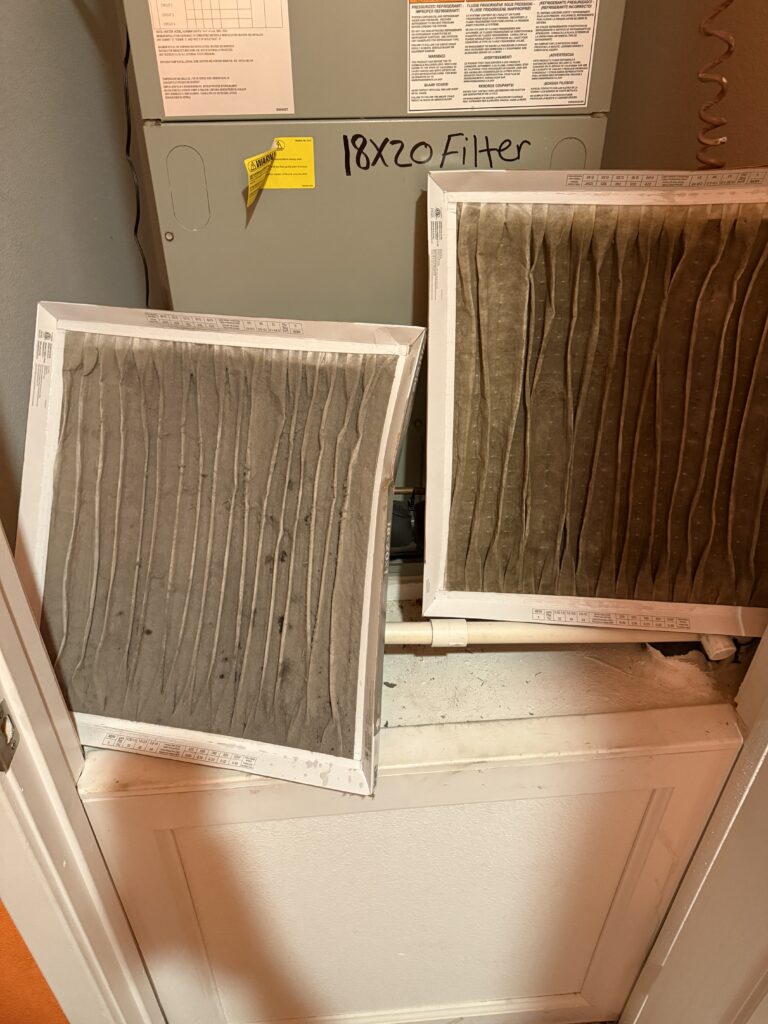
A dirty, clogged filter fails at this primary job. When the filter becomes saturated with contaminants, it can no longer trap new particles. The airflow pressure can even cause the filter to deform or collapse, allowing debris to bypass it entirely. In other a-w, the very component designed to protect your system becomes the source of its potential failure.
The Direct Link Between Your Filter and Your Air Quality
The secondary, and equally important, function of the filter is to improve your indoor air quality. This is a direct consequence of its first job. As your HVAC system runs, it is continuously recycling all the air in your home. This means all the air in your living room, bedrooms, and kitchen is repeatedly pulled into the return ducts, passed through the filter, conditioned by the system, and then pushed back out through the supply vents. This cycle happens multiple times per hour.
When the filter is clean and functioning properly, it traps a significant portion of airborne allergens and irritants with each pass. Dust mites, pollen, pet dander, and even mold spores are captured in the filter’s media, effectively removing them from the air you breathe. This process is your home’s first line of defense against poor indoor air, and it is crucial for individuals with allergies, asthma, or other respiratory sensitivities
Want to know when to replace your filter? Click here to see how often.
Conversely, a filter that is old and clogged stops cleaning the air. It cannot hold any more particles, so all those contaminants are simply recirculated back into your home. The situation can actually become worse. A filter that is choked with dust can become a concentrated source of allergens. Even more concerning in Florida’s humid climate, a dirty filter full of organic “food” like dust and dander can become a breeding ground for mold and bacteria, especially if it gets damp from the air conditioning process. The system then blows these harmful spores directly into your living space, degrading your air quality instead of improving it.
The Financial Case: Filters and Energy Efficiency
A clean filter allows air to pass through it with minimal resistance. Your HVAC system, specifically the blower motor, is engineered to move a very specific volume of air. This is known as airflow, and it is the entire basis for efficient operation. When the filter is clean, the motor can pull the required amount of air easily, running at its intended speed and power consumption.
A dirty filter is a physical blockage. This blockage forces the blower motor to work significantly harder and run longer to try and pull the same volume of air through a dense mat of dust and debris. It is the equivalent of forcing you to breathe through a thick, damp cloth. The motor is strained, and this strain translates directly into higher energy consumption. That sudden, unexplained spike in your electricity bill often correlates directly with a filter that has been forgotten for too long.
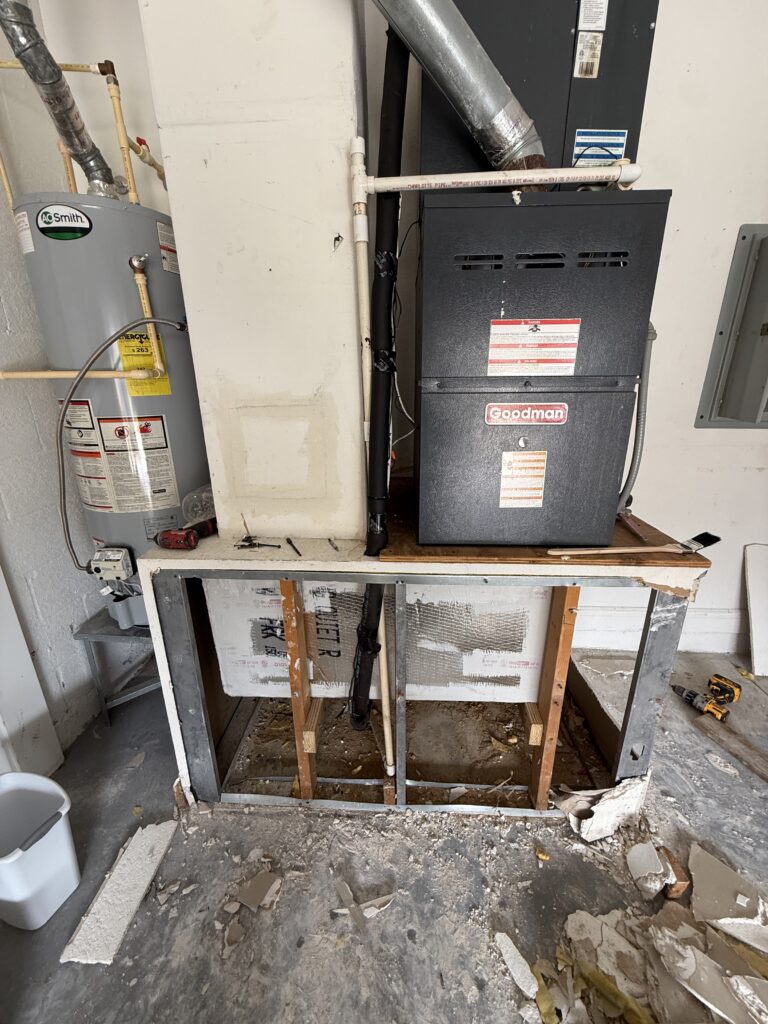
This reduced airflow has other negative effects on efficiency. Because the system cannot move the proper amount of air, it cannot effectively distribute the cool air it is producing. This leads to longer run times. Your air conditioner will run and run, struggling to reach the temperature set on your thermostat. This noti only wastes massive amounts of energy but also creates uneven cooling, leaving you with hot and cold spots throughout your home.
How a Dirty Filter Can Destroy Your HVAC System
The consequences of a neglected filter go far beyond poor air quality and high bills; a clogged filter can cause catastrophic and expensive damage to your equipment. This is the most critical reason to stay on top of this simple maintenance task.
In a cooling system, the evaporator coil is the component that gets cold and absorbs heat from your home’s air. It is designed to have a constant, strong flow of warm air moving across its fins. When a dirty filter restricts this airflow, the coil does not get the warm air it needs. As a result, the refrigerant inside gets too cold, and the temperature of the coil plummets below freezing. The humidity in the air then freezes onto the coil, and in a very short time, the entire coil becomes encased in a solid block of ice.
A frozen coil immediately stops all cooling. But the damage is more severe than that. The ice can melt and overflow the system’s drain pan, sending water cascading into your attic or utility closet, causing major water damage to ceilings, walls, and floors. Furthermore, this condition puts immense stress on the compressor, the heart of your AC system. This strain can lead to a premature compressor failure, a repair that is so expensive it often means replacing the entire HVAC unit.
Time to replace your furnace? Click here to learn more about furnace installation.
In a heating system, the danger is similar. A furnace’s heat exchanger needs proper airflow to dissipate the intense heat it produces. A clogged filter can trap that heat, causing the heat exchanger to overheat and crack. A cracked heat exchanger is not only a very costly repair but also a serious safety hazard, as it can leak dangerous carbon monoxide gas into your home.
Understanding Filter Ratings and Types
Not all filters are created equal. They are rated using the MERV scale, or Minimum Efficiency Reporting Value. This scale, typically from 1 to 20, measures how effectively a filter removes particles from the air.
A basic, cheap fiberglass filter (MERV 1-4) offers very low filtration. It will protect your blower motor from large debris like lint and carpet fibers, but it does very little to improve your indoor air quality. It allows most dust, pollen, and dander to pass right through.
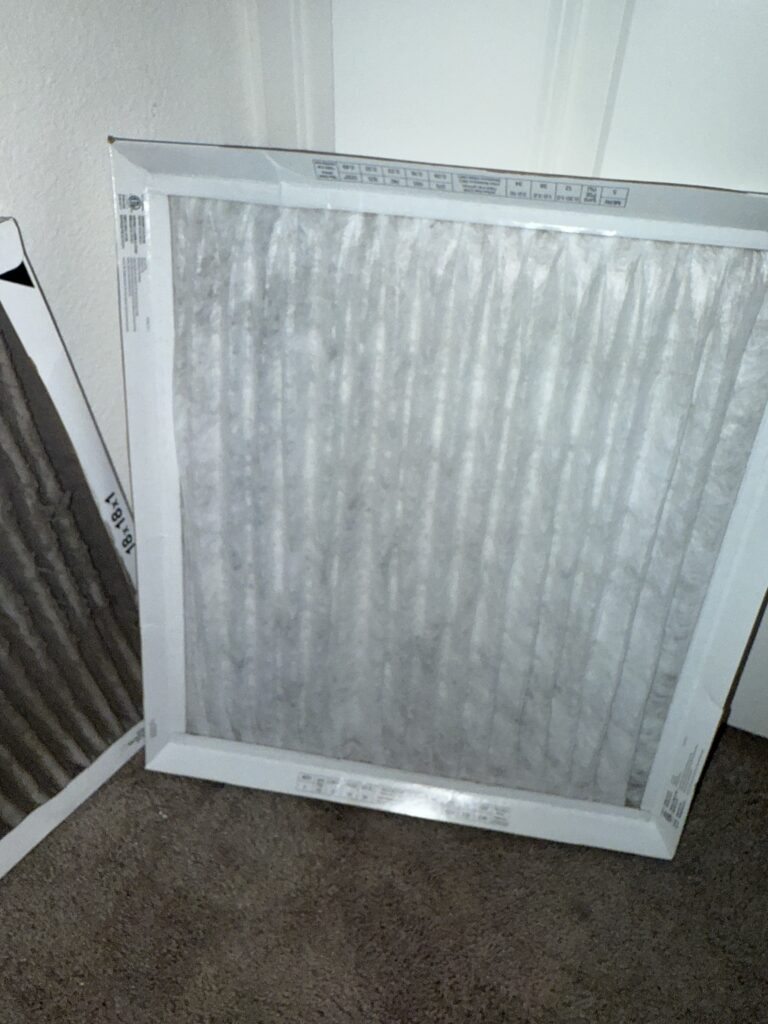
Pleated media filters (MERV 8-13) are the most recommended for residential use. They represent an excellent balance between air filtration and airflow. A filter in this range can trap a high percentage of common allergens like pollen, dust mites, and mold spores without being so dense that it restricts airflow.
It is important to know that a higher MERV rating is not always better. A high-MERV filter (MERV 14+) or a HEPA filter is extremely dense. While it filters the air very effectively, most residential HVAC systems are not designed for this level of restriction. Using a filter that is too restrictive for your system creates the exact same problems as a dirty filter: it strains the motor, reduces efficiency, and can cause the system to freeze up. Always check your system’s manual or consult a professional from Legion Cooling to determine the highest MERV rating your specific unit can handle.
Filter Changes: Frequency and Best Practices
There is no single, one size fits all answer for how often to change your filter. The most common recommendation is every 90 days for a standard 1-inch filter, but this is just a guideline. In Central Florida, where your AC runs almost nonstop for much of the year, you will likely need to change it more often.
The ideal frequency for your home depends on several factors. If you have pets, they introduce a large amount of dander and hair, which will clog a filter very quickly. If anyone in your home has allergies or you live near a new construction site with lots of dust, you should check your filter monthly. The best rule is to perform a visual check. Hold the filter up to a light source. If you cannot see light passing through it, or if it is visibly covered in a gray, fuzzy layer of dust, it is time to change it, even if it has only been 30 days.
When changing your filter, the most important steps are getting the correct size and inserting it in the right direction. The filter’s size is printed on its cardboard frame. Using a filter that is even a half-inch too small will allow air to bypass it, sucking contaminants directly into your system. There is also an arrow on the frame indicating the proper direction of airflow; this arrow should always point toward the air handler or furnace.
The humble air filter is a small, inexpensive component that has a massive impact on your home’s comfort, your family’s health, and your finances. A clean filter is your partner in maintaining a healthy home environment. It works with your HVAC system to scrub the air of allergens and irritants. It ensures your system can run at peak efficiency, keeping your energy bills low and preventing unnecessary wear and tear.
A dirty filter, by contrast, actively works against you. It degrades your indoor air quality, costs you money in wasted energy, and puts your entire HVAC system at risk of a catastrophic, expensive breakdown. This simple piece of maintenance is the most powerful action you can take as a homeowner to protect your investment and your family’s well being. Checking and changing your filter regularly is the key to a healthy, efficient, and comfortable Winter Garden home. For a complete system checkup, contact Legion Cooling to ensure every component, starting with your filter, is working at its best.