
When to Replace Your Air Filter in Peak Summer
Peak summer in Central Florida puts enormous strain on your air conditioning system, and your air filter takes the brunt of that workload. Hot, humid days mean your AC runs almost constantly, pulling air through the filter hour after hour. That constant airflow loads the filter with dust, pollen, pet dander, and other debris much faster than during milder months. A dirty filter forces your system to work harder, drives up energy bills, and can lead to expensive breakdowns right when you need cooling the most. Knowing exactly when to swap out that filter during the hottest stretch of the year protects your comfort, your wallet, and your equipment. This guide walks you through the right timing, the warning signs, and the steps to keep your home cool all summer long.
How Often Should You Replace Your Air Filter During Peak Summer
During June, July, August, and September in Florida, your air filter needs more frequent attention than any other time of year. The standard recommendation of every 90 days does not hold up when your system runs 12 to 16 hours a day in 95-degree heat. Most homes should shorten that interval to every 30 to 45 days during peak summer. Homes with pets, smokers, or family members with allergies may need replacement every 20 to 30 days. Checking the filter monthly and holding it up to a light source gives you a quick visual on whether it needs changing. When light barely passes through, the filter is done.
How Often You Should Replace Your Air Filter Based on Household Factors
Household size and lifestyle play a huge role in how fast your air filter loads up during peak summer. A single person living in a small apartment will not fill a filter nearly as fast as a family of five with two dogs and a cat. Pet hair is one of the biggest culprits for clogged filters, and shedding often increases during warmer months. Pollen counts in Central Florida stay elevated through summer, and every time someone opens a door, more allergens ride in on the air. Homes with frequent cooking, candle burning, or dusty hobbies like woodworking will load filters even faster. Take a realistic look at your household before settling on a replacement schedule.
Allergy sufferers and households with young children or elderly residents should replace filters more aggressively during peak summer. Poor filtration directly affects the air your family breathes, and a dirty filter actually releases captured particles back into your home. Asthma symptoms often flare up during summer months when AC systems recirculate the same indoor air repeatedly. Upgrading to a higher MERV-rated filter helps, but higher filtration also means the filter loads faster and needs more frequent changes. Balance filtration quality with replacement frequency to keep indoor air clean without starving your system of airflow. Your HVAC equipment needs to breathe just as much as your family does.
Construction projects, nearby landscaping work, and Florida thunderstorm season all push more debris into your home during peak summer. Pollen, mold spores, and dust get stirred up by wind and rain, then find their way indoors through windows, doors, and even small gaps in the building envelope. If you live near a construction site or a busy road, expect to change filters on the shorter end of the recommended range. Homes on dirt or gravel roads face similar challenges with fine dust infiltration. Checking your filter after big storms or during heavy pollen weeks helps you stay ahead of buildup. Want to improve the air your family breathes? Click here for our indoor air quality services.
How Often You Should Replace Your Air Filter Based on Filter Type
Fiberglass filters are the cheapest option on the market, and they need the most frequent replacement during peak summer. These thin, blue or green filters typically last only 30 days under heavy summer use. They capture large particles like lint and hair but miss smaller allergens and dust. If you are using fiberglass filters, plan on monthly changes without exception during the hot season. Stock up ahead of time so you never get caught running a clogged filter. The low price point makes frequent replacement affordable for most budgets.
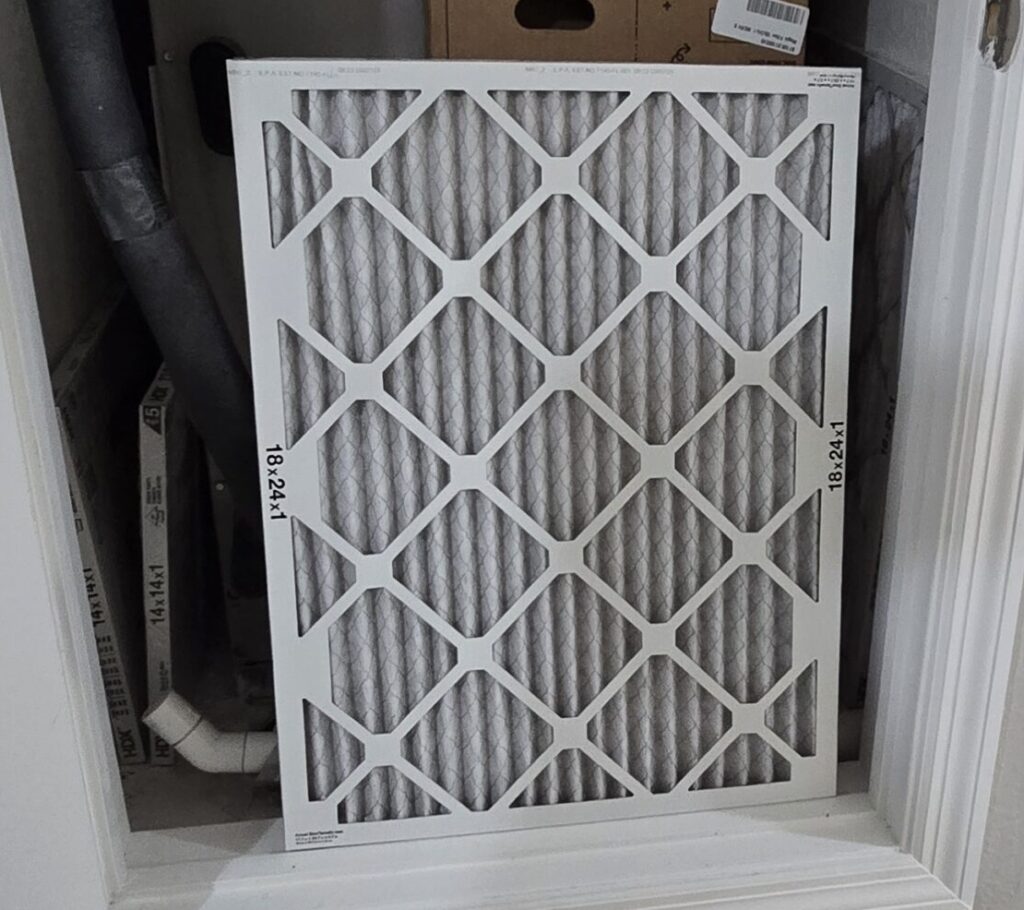
Pleated filters offer much better filtration and typically last 60 to 90 days under normal conditions. During peak summer in Florida, cut that timeline down to 45 to 60 days for most homes. Pleated filters come in various MERV ratings, with MERV 8 being standard and MERV 11 to 13 offering better allergen capture. Higher MERV ratings trap more particles but also create more resistance to airflow. If you upgrade to a MERV 13 filter, check it every 30 days during summer to avoid restricting your system. Always match the filter size and type recommended by your HVAC manufacturer or technician.
Washable and electrostatic filters last longer but require regular cleaning to stay effective during peak summer. These filters need rinsing every 30 days in the hot season, even though they do not get thrown away. Make sure the filter is completely dry before reinstalling it, because a damp filter can introduce moisture into your ductwork and promote mold growth. HEPA-style filters used in some whole-home systems have their own replacement schedules that should be followed closely. Check your owner manual or ask your HVAC technician for the exact interval your specific filter needs. The right filter, changed at the right time, makes a measurable difference in cooling performance.
How Often You Should Replace Your Air Filter Based on System Runtime
Peak summer in Central Florida means your AC rarely gets a break, and runtime is the biggest factor in how fast a filter loads. Systems that cycle on and off briefly during mild weather move far less air through the filter than systems running nearly nonstop in July. A typical Florida home sees AC runtime jump from 4 to 6 hours daily in spring to 12 to 16 hours daily in peak summer. That tripling of airflow volume means your filter catches three times as much debris in the same calendar period. Smart thermostats with runtime tracking can give you precise numbers on how hard your system is working. Use those numbers to inform your replacement schedule rather than relying on the calendar alone.
Oversized or undersized HVAC systems affect filter loading differently during peak summer. An oversized system short-cycles, meaning it turns on and off frequently without running long enough to dehumidify properly. Short-cycling still moves air through the filter, but it also creates uneven wear patterns. An undersized system runs continuously and can load a filter even faster than a properly sized unit. If your system seems to run constantly and struggles to keep up on the hottest days, your filter deserves extra attention. Proper system sizing and regular maintenance go hand in hand for filter longevity.
Ductwork condition also influences how fast filters load during peak summer. Leaky ducts pull unconditioned, dusty air from attics and wall cavities directly into your return, dumping debris onto your filter at an accelerated rate. Sealed, clean ductwork keeps the filter focused on capturing indoor air contaminants rather than attic dust. If you notice your filter turning gray or black quickly, duct leakage could be the culprit. A professional duct inspection can identify problem areas and improve both air quality and filter life. Need your ducts inspected or cleaned? Click here for our air duct services.
Signs Your Air Filter Needs Replacing During Peak Summer
Your air conditioner gives off clear warning signs when the filter is overdue for a change, and catching those signs early prevents bigger problems. Weak airflow from your vents is often the first clue, followed by rising energy bills without any change in thermostat settings. You might notice dust accumulating on furniture faster than usual or a musty smell when the system kicks on. Some homeowners hear their AC running longer than normal to reach the set temperature. In severe cases, a completely clogged filter can cause the evaporator coil to freeze, shutting the system down entirely. Paying attention to these signals during peak summer saves you from emergency repair calls.
Signs Your Air Filter Needs Replacing Based on System Performance
Reduced airflow from your supply vents is the most common indicator that your air filter needs replacing during peak summer. Hold your hand in front of a vent when the system is running and compare the strength to what you remember from earlier in the season. Weak airflow means your blower motor is fighting against filter resistance, which wastes energy and stresses the equipment. Rooms farther from the air handler will feel the airflow drop first, leaving bedrooms stuffy while the living room stays comfortable. Uneven cooling throughout your home often traces back to a clogged filter rather than any ductwork issue. Replacing the filter is always the first step when airflow drops off.
Longer cooling cycles are another telltale sign during the hottest months of the year. A healthy system should bring your home from 78 to 74 degrees in a reasonable amount of time, even on a hot afternoon. When the filter clogs, the system has to run much longer to achieve the same temperature drop because less conditioned air reaches your living spaces. Your thermostat might show the system running for hours without reaching the set point. This extended runtime burns through electricity and accelerates wear on every component in your AC. A fresh filter often restores normal cycle times immediately.
Higher-than-expected electricity bills during peak summer frequently point to a clogged air filter as the root cause. Your cooling system is typically the largest energy user in your home during summer, accounting for 40 to 60 percent of total electricity use. When the filter restricts airflow, the blower motor draws more amps and the compressor runs longer, both of which drive up consumption. A 10 percent jump in your summer electric bill with no change in habits often traces back to filter neglect. Compare your bill to the same month last year to spot unusual spikes. The cost of a new filter is a tiny fraction of what you save on electricity.
Signs Your Air Filter Needs Replacing Based on Indoor Air Quality
Increased dust on furniture, electronics, and baseboards during peak summer often means your filter is no longer capturing particles effectively. A properly functioning filter removes most airborne dust before it settles in your home. When the filter reaches capacity, new particles pass through and land on every surface. You might find yourself dusting twice a week instead of once a month. Dark lines appearing around supply vents are another red flag, caused by dusty air blowing past the registers and staining the surrounding paint or ceiling. These visual cues mean your filter is overdue for replacement.
Worsening allergy or asthma symptoms in your household during peak summer point directly to filter problems. Indoor air quality degrades quickly when the filter stops capturing pollen, pet dander, dust mites, and mold spores. Family members who normally breathe fine indoors might start sneezing, coughing, or waking up congested. Children and elderly residents are especially sensitive to indoor air quality changes. If allergy medications are not providing their usual relief, look at your air filter before blaming outdoor conditions. A fresh filter, especially a higher MERV-rated one, can transform how your home feels to breathe in.
Musty or stale odors coming from your vents during peak summer indicate both a dirty filter and potential moisture issues in the system. Trapped humidity combined with organic debris on a saturated filter creates the perfect environment for mold and mildew growth. That smell gets distributed throughout your home every time the AC kicks on. In severe cases, you might see visible mold on the filter itself or around the return grille. Replacing the filter stops the immediate odor, but persistent smells mean your evaporator coil or drain pan may need professional cleaning. Indoor air quality problems compound quickly in Florida humidity.
Signs Your Air Filter Needs Replacing Based on Equipment Warnings
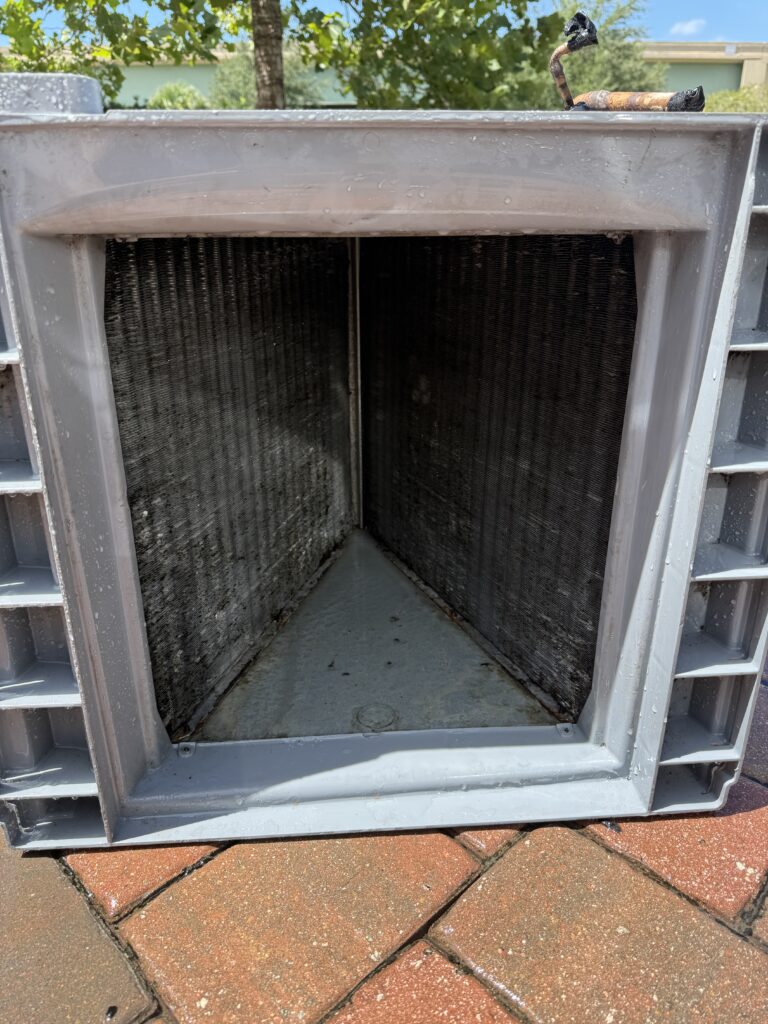
A frozen evaporator coil is one of the most serious signs of air filter neglect during peak summer. When airflow drops too low, the refrigerant in the coil gets too cold and ice forms on the copper tubing and fins. You might see ice buildup on the refrigerant line outside your air handler or notice water dripping where it should not be. A frozen coil brings cooling to a complete halt, even though the system keeps running and burning energy. Shut the system off immediately if you suspect freezing, then replace the filter after the ice melts. Running a frozen system can damage the compressor, which is the most expensive part to replace.
Short-cycling or frequent safety shutoffs during peak summer often trace back to filter issues. Modern HVAC systems have sensors that detect unsafe operating conditions and shut the equipment down to prevent damage. A clogged filter can trigger high-pressure or low-airflow faults that cause the system to cycle off unexpectedly. You might reset the breaker only to have the system shut down again within hours. Before calling for repairs, check and replace the filter, because that fixes the problem in many cases. Repeated shutoffs without filter replacement usually mean something more serious is happening and requires a professional diagnosis.
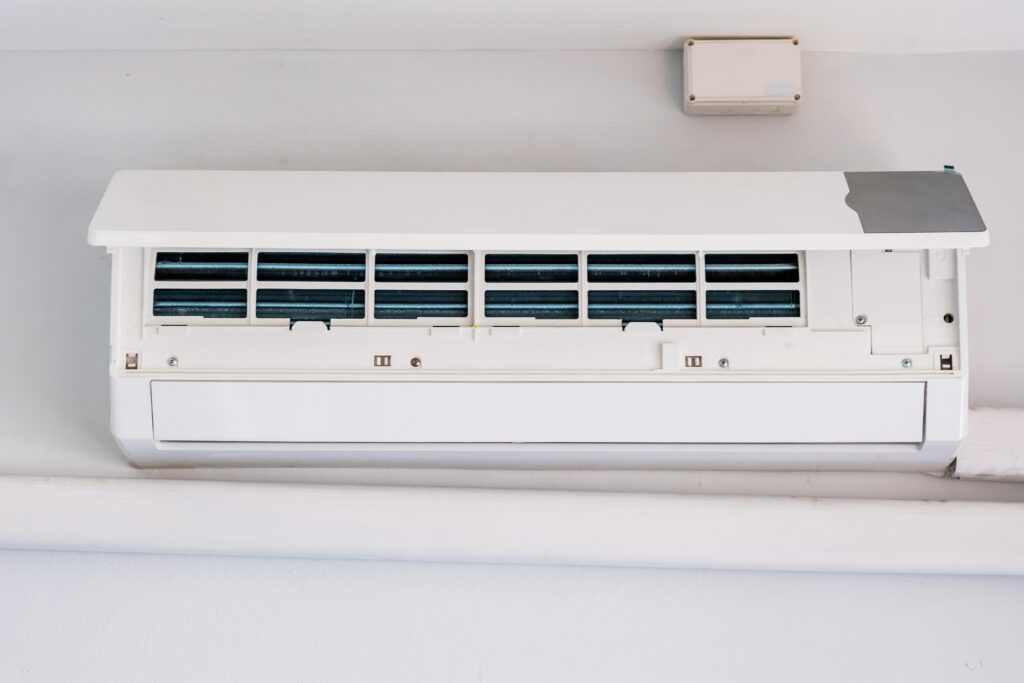
Unusual noises from your air handler during peak summer can indicate a filter so clogged that the blower is struggling to pull air through it. Whistling, wheezing, or straining sounds from the return grille point to extreme airflow restriction. In some cases, the filter can actually get sucked into the blower compartment if it collapses under pressure. Rattling or vibrating noises sometimes mean the filter has shifted out of its slot and air is bypassing it entirely. Any new noise from your AC warrants a filter check before anything else. Need an expert to look at your system? Click here for our air conditioning services.
Why You Need Professional HVAC Support for Peak Summer Performance
Keeping your air filter fresh is one piece of a larger summer maintenance picture, and partnering with a trusted HVAC company makes the whole process easier. Peak summer is the worst time for a breakdown, and small issues can snowball into major repairs when the system runs around the clock. Professional tune-ups catch problems before they leave you sweating through a Florida afternoon. Regular service also keeps your warranty valid and extends the useful life of your equipment. A reliable partner helps you plan replacements, schedule maintenance, and handle emergencies with confidence.
Why You Need Professional HVAC Support for System Longevity
Your air conditioner represents a significant investment, and professional maintenance protects that investment during the harshest operating conditions of the year. Most residential AC systems last 12 to 15 years with proper care, but neglect can cut that lifespan in half. Summer stress accelerates wear on compressors, blower motors, capacitors, and coils, all of which cost hundreds or thousands to replace. Annual professional maintenance catches small issues like low refrigerant, weak capacitors, or dirty coils before they cause cascading failures. The cost of a tune-up is a fraction of what a major repair or early replacement costs.
Preventive maintenance also keeps your system operating at peak efficiency throughout peak summer. A well-maintained AC uses 15 to 20 percent less electricity than a neglected one, which adds up to real savings over a hot Florida summer. Clean coils transfer heat properly, correct refrigerant levels allow the system to cool as designed, and calibrated controls keep cycles running smoothly. All of these factors reduce runtime and lower your energy bills. Professional technicians use specialized tools and training to dial in every aspect of system performance.
Manufacturer warranties often require documented annual maintenance to stay valid, and skipping service can void coverage on expensive components. If your compressor fails during peak summer and you cannot show maintenance records, you might be stuck paying thousands out of pocket. Legion Cooling keeps detailed service records for every customer, so warranty claims go smoothly when needed. Staying on top of maintenance also means fewer surprises and more predictable costs year after year. Protect your equipment investment with a professional partner who cares about your long-term comfort.
Why You Need Professional HVAC Support for Emergency Response
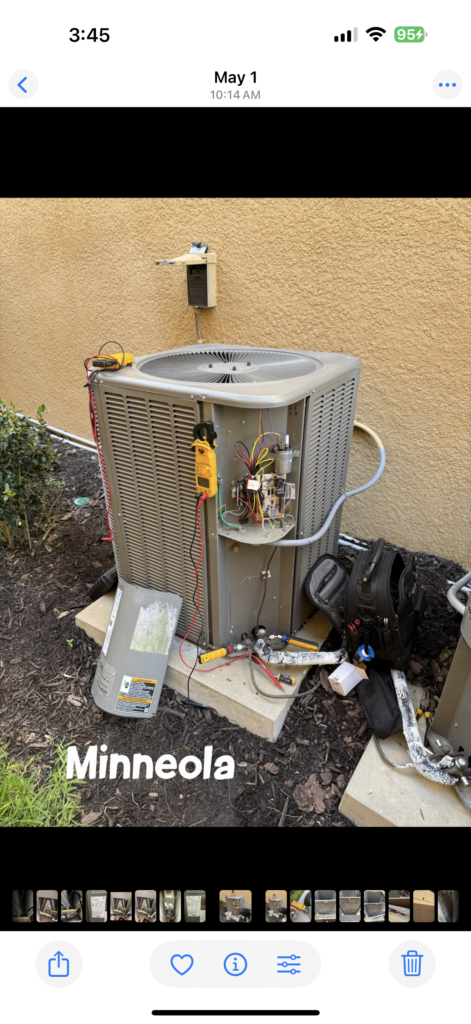
Summer breakdowns happen at the worst possible times, and having a trusted HVAC company on speed dial makes all the difference. Florida heat can push indoor temperatures into dangerous territory within hours of an AC failure, especially for children, elderly residents, and pets. Legion Cooling responds quickly to emergency calls because we know how critical cooling is during peak summer. Our trucks stay stocked with common replacement parts so most repairs get finished in a single visit. Fast service minimizes the disruption to your family and gets your home comfortable again.
Professional technicians diagnose problems accurately the first time, which saves you money and frustration. Guessing at repairs or swapping parts randomly often leads to repeat failures and higher overall costs. Our team uses proper diagnostic tools and years of training to identify the real cause of any AC issue. That accuracy means you pay for the repair you actually need rather than a series of educated guesses. Honest diagnostics build long-term trust and keep our customers coming back for every HVAC need.
Financing options and straightforward quotes take the stress out of unexpected summer repairs. Major AC problems can hit hard when the budget is not ready, and we offer financing to spread the cost over manageable payments. Every quote is clear and complete, with no hidden fees or surprise charges after the work begins. You know exactly what the repair costs before we start, so you can make informed decisions for your family. That transparency is part of how Legion Cooling does business every day.
Why Choose Legion Cooling for Your Peak Summer HVAC Needs
Legion Cooling is a family owned, faith driven HVAC company serving Winter Garden and the surrounding Central Florida communities with honest, expert service. We built our reputation on doing the job right every time, treating every home like our own, and standing behind our work. Our team is licensed, insured, and committed to the kind of craftsmanship that lasts. When you call us, you get a real local expert who knows Florida summers and the demands they place on cooling equipment. That local knowledge translates into better solutions for your specific home.
Our service area covers Winter Garden, Horizon West, Clermont, Windermere, Dr. Phillips, Apopka, Winter Park, and many other Central Florida communities. We show up on time, explain what we find in plain language, and give you straightforward quotes with no hidden fees. Financing is available for customers who need flexibility on larger projects or unexpected repairs. Our goal is to make every interaction simple, honest, and productive so you can get back to enjoying your summer. That commitment shows in every call, every visit, and every repair.
Ready to get your air filter, AC system, or whole-home comfort on track for peak summer? Reach out to Legion Cooling at (321) 316-2422 or email info@legioncooling.com to schedule service. You can also stop by our office at 1334 Winter Green Way, Winter Garden FL 34787, or visit our website to learn more about our full range of services. Our team is ready to help with filter recommendations, maintenance plans, repairs, and new system installations. Trust the family owned, faith driven team that Central Florida counts on for honest expert HVAC service.