What to Do When Your AC Stops Working in a Heat Wave
A broken air conditioner during a Florida heat wave creates an immediate problem for any household. Indoor temperatures can climb past 90 degrees within hours, putting children, pets, and older family members at real risk. Knowing the right steps to take before the technician arrives can protect your home and speed up the repair process. Most AC failures during extreme heat come from a handful of common issues, and some of these you can troubleshoot safely on your own. Other problems require professional diagnosis and repair to fix correctly. This guide walks through the practical steps every Central Florida homeowner should follow when the cooling stops on the hottest day of the year.
How to Troubleshoot an AC That Stops Working in a Heat Wave
Before calling for service, run through a short checklist to rule out simple causes. A tripped breaker, a clogged filter, or a thermostat set incorrectly can mimic a major system failure. These checks take only a few minutes and sometimes restore cooling without any repair cost. If the system still will not run after these steps, the problem likely involves the compressor, refrigerant, electrical components, or the blower motor. At that point, professional service becomes the safest path forward.
The First Troubleshooting Steps for an AC That Stops Working
Start at the thermostat. Confirm the setting is on “Cool” and the temperature is set at least three degrees below the current room reading. Replace the batteries if the screen looks dim or blank. A surprising number of service calls during heat waves trace back to a thermostat that lost power or got bumped to the wrong mode. While you are there, listen for the familiar click that signals the system trying to start.
Next, check the air filter. A filter packed with dust and pet hair restricts airflow so badly that the evaporator coil can freeze solid, which shuts the system down. Pull the filter out and hold it up to a light source; if you cannot see light through it, replace it immediately. Filters should be changed every one to three months in Florida, and faster during peak cooling season. Running a clean filter helps the system breathe and recover from heat stress.
Then walk to the electrical panel. Look for a breaker labeled “AC,” “Air Handler,” or “Condenser” that has tripped to the middle or off position. Flip it fully off, wait ten seconds, then flip it back on. If the breaker trips again right away, stop and call a professional; repeated tripping signals a short, a failing capacitor, or a compressor pulling too much current. These conditions can cause fires if ignored.
What to Do When AC Troubleshooting Steps Do Not Restart Cooling
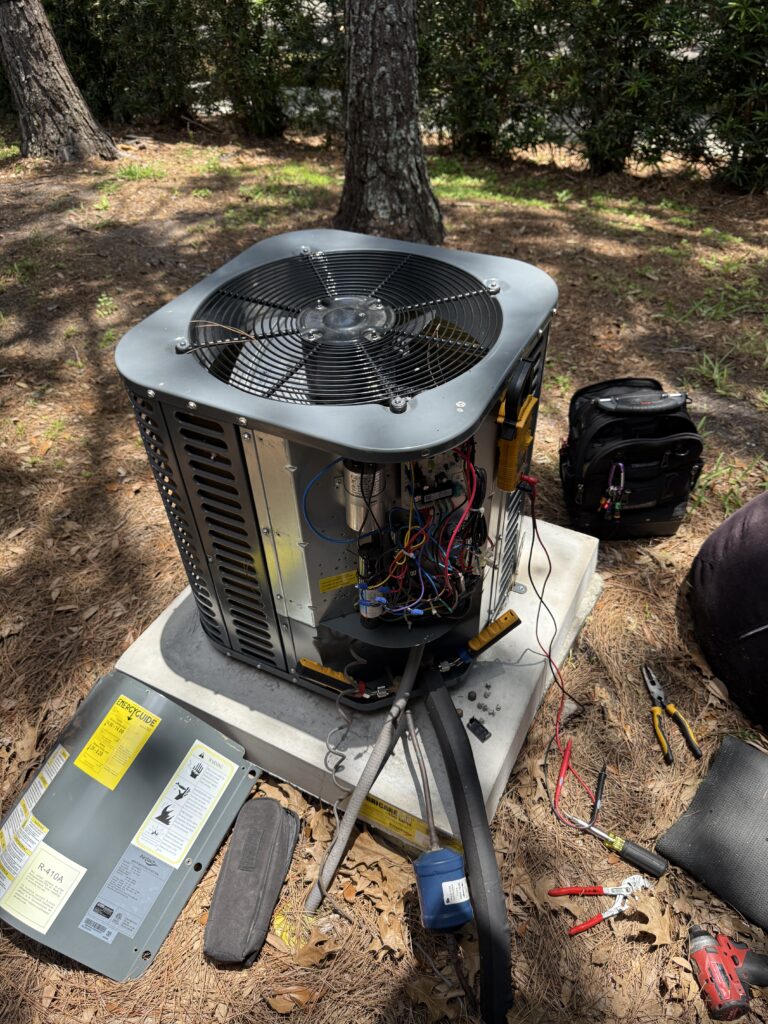
Step outside and look at the condenser unit. Clear away any leaves, grass clippings, or debris pressed against the fins. The unit needs at least two feet of clearance on every side to release heat properly. If the outdoor fan is not spinning while the system calls for cooling, that points to a failed capacitor or contactor. These parts fail often in Florida heat and require a licensed technician to replace.
Check the indoor unit for ice. A frozen evaporator coil looks like a block of frost on the copper lines or inside the air handler closet. If you see ice, turn the system off at the thermostat and switch the fan to “On” to help it thaw. Running a frozen system burns out the compressor, which is the most expensive part to replace. Thawing usually takes three to six hours, and the underlying cause still needs repair.
Listen for unusual sounds. Grinding, screeching, or loud humming from either the indoor or outdoor unit means stop running the system. These noises point to motor bearings, a seized compressor, or electrical arcing. Continuing to run the unit through these symptoms turns a moderate repair into a full replacement. Need fast help during a heat wave? Click here for our air conditioning service.
Staying Safe While Your AC Stops Working in a Heat Wave
Move the household to the coolest room in the home, usually one on the north side or a lower floor. Close blinds and curtains on every window to block solar heat gain. Box fans placed in windows during cooler evening hours can pull in fresh air and push hot air out. Avoid using the oven, dryer, or other heat-producing appliances until the AC is restored. These steps lower indoor temperature by several degrees while you wait.
Hydrate constantly with cool water, even if you do not feel thirsty. Heat exhaustion sets in faster than most people expect once indoor temperatures pass 85 degrees. Watch children and seniors closely for signs like headache, dizziness, heavy sweating, or confusion. Cool showers, damp washcloths on the neck, and frozen water bottles held under the arms help regulate body temperature. Pets need extra water bowls and access to tile floors, which stay cooler than carpet.
If indoor temperatures climb past 90 degrees and the repair will take longer than a few hours, leave the home temporarily. Public libraries, shopping centers, and community cooling shelters provide safe relief. Never leave children or pets in a parked car while running errands, since vehicle interiors heat much faster than homes. Document the failure with photos and notes for any home warranty claim. Staying safe matters more than waiting at home for the technician.
Common Reasons Your AC Stops Working During a Heat Wave
Florida heat waves push air conditioning systems to their absolute limits. Equipment that handles 88 degree days without trouble can fail when outdoor temperatures hit 95 or higher for several days straight. The combination of extended runtime, high humidity, and aging parts creates the perfect conditions for breakdowns. Understanding what fails most often helps homeowners describe the problem accurately when calling for service. It also helps explain why preventive maintenance pays off during summer months.
Why Capacitors Cause AC Systems to Stop Working in a Heat Wave
The capacitor is a small cylindrical component that gives the compressor and fan motors the jolt of power they need to start. Heat is the enemy of capacitors, and Florida summers shorten their lifespan dramatically. A failing capacitor often shows itself as a humming outdoor unit with a fan that will not spin, or a system that clicks on and immediately shuts off. Once a capacitor fails completely, the compressor cannot start at all. Replacement is a common repair that a trained technician completes in under an hour.
Capacitors usually last five to ten years in cooler climates, but Central Florida homeowners often see failures around the four to seven year mark. The constant runtime during heat waves accelerates wear on the internal components. You may notice the system struggling for days or weeks before the capacitor fails outright, with longer cool-down times and short cycling as warning signs. Catching a weak capacitor before it dies prevents an emergency call during a hot afternoon. Annual maintenance includes capacitor testing with a meter to predict failures.
Replacing a capacitor is not a do-it-yourself job, even though the part itself costs little. The component stores a strong electrical charge that can shock or injure someone who does not know how to discharge it safely. Using the wrong size capacitor damages the motor it serves, leading to a much larger repair bill. A licensed HVAC technician verifies the correct microfarad rating and voltage before installation. This precision keeps the system running at the manufacturer specifications.
Why Refrigerant Issues Cause AC Systems to Stop Working in a Heat Wave
Low refrigerant rarely happens because a system “uses up” refrigerant the way a car burns gasoline. A sealed AC system holds the same refrigerant for its entire lifespan unless a leak develops. Vibration, corrosion, and factory defects create pinhole leaks in copper lines, coils, or fittings. Once refrigerant levels drop, the system cannot absorb heat from indoor air, and cooling capacity falls off sharply. During a heat wave, even a small leak makes the difference between a cool home and a warm one.
Signs of low refrigerant include warm air from the vents, ice forming on the copper line outside, and a hissing or bubbling sound near the indoor coil. The system may run constantly without ever reaching the thermostat setting. Some homeowners notice their electric bill climbing as the unit struggles to keep up. Adding refrigerant without finding and repairing the leak only delays the inevitable. Federal law also requires technicians to locate and address leaks before recharging the system.
Modern AC systems use R-410A or the newer R-454B refrigerant, both of which require EPA certified handling. Older systems still in service may use R-22, which is no longer manufactured and costs significantly more to replenish. A technician uses electronic leak detectors, dye, or pressure tests to find the source. The repair could involve sealing a fitting, replacing a section of line, or installing a new coil. Want to schedule a system check before the next heat wave? Click here for our air conditioning service.
Why Compressor Failure Causes AC Systems to Stop Working in a Heat Wave
The compressor is the heart of the air conditioning system, and it is also the most expensive component. Located inside the outdoor condenser unit, it pressurizes refrigerant and circulates it through the system. Heat waves stress compressors through long runtimes, high head pressure, and electrical surges from neighborhood power fluctuations. A failing compressor sounds different from a healthy one; listen for hard starts, loud rattling, or complete silence when the unit should be running. Once the compressor seizes, the entire condenser may need replacement.
Several conditions push compressors toward failure during summer. Dirty condenser coils trap heat against the unit, raising operating temperatures past safe limits. Low refrigerant causes the compressor to overheat because it relies on cool refrigerant returning through the suction line. Electrical issues like a weak capacitor force the compressor to work harder on every start. Each of these problems is preventable with regular maintenance and prompt attention to small symptoms.
When a compressor fails, the homeowner faces a real decision point. Replacing just the compressor on an older system rarely makes financial sense, since the rest of the unit may follow within a year or two. A full condenser replacement costs more upfront but comes with new warranties and modern efficiency ratings. Newer SEER2 systems use less electricity and cool more evenly, lowering monthly bills for years. A trusted contractor walks the homeowner through both options with honest pricing.
Why You Need Professional AC Service During a Florida Heat Wave
Heat waves expose every weakness in an aging air conditioning system. Waiting too long to call for service puts family members at risk and lets small problems grow into major ones. A licensed technician brings the diagnostic tools, replacement parts, and training needed to restore cooling safely and quickly. Choosing a local company that answers the phone and shows up on time matters more during emergencies than during routine seasons. Legion Cooling serves Central Florida families with fast response, honest quotes, and quality workmanship.
Why You Need Fast Response When Your AC Stops Working
Every hour without cooling during a heat wave makes the situation worse. Indoor humidity rises, furniture and electronics suffer in the heat, and family health risks grow. A company with stocked trucks and trained technicians can often complete the repair on the first visit. Slower contractors sometimes need to order parts, leaving the home without cooling for days. Asking about typical response times before booking helps set realistic expectations.
Local companies based in your service area arrive faster than regional chains dispatching from distant hubs. Drive time matters when the indoor temperature is climbing past 88 degrees. A technician familiar with Central Florida homes also knows which equipment brands and configurations are common in the area. This local knowledge speeds up diagnosis on every call. Need same-day help? Click here for our air conditioning service.
After-hours availability matters during summer, when failures often happen on weekends and evenings. A company that offers emergency service charges fair rates without exploiting the urgency. Ask about service area, hours, and emergency pricing before the heat wave arrives. Booking a maintenance visit in spring also reduces the chance of a midsummer breakdown. Preparation pays off when the temperature spikes.
Why You Need Honest Diagnostics on a Failed AC System
Some contractors recommend full system replacement when a repair would solve the problem. Others patch symptoms without finding the root cause, leading to repeat failures within weeks. An honest technician explains what failed, why it failed, and what options exist to fix it. Photos of damaged parts and clear pricing on every line item build trust between the homeowner and the company. This kind of transparency is what families deserve during a stressful repair.
Diagnostic skill comes from training and experience with many brands and configurations. A good technician checks refrigerant pressures, electrical readings, airflow, and component temperatures before naming a single repair. Skipping these steps leads to wrong guesses and wasted money. The homeowner should feel comfortable asking questions and seeing the readings firsthand. A confident technician welcomes the conversation.
Quotes should arrive in writing before any work begins. Verbal estimates create misunderstandings and disputes after the job is complete. Hidden fees for refrigerant, diagnostic time, or after-hours surcharges should be disclosed upfront. Financing options help families spread larger repairs over manageable payments. Straightforward quotes with no hidden fees protect the customer relationship for years.
Why You Need Legion Cooling for AC Repairs in Central Florida
Legion Cooling is a family owned, faith driven HVAC company serving Winter Garden and the surrounding communities. The team brings years of experience to every call, with licensed and insured technicians who treat each home with respect. Honest expert service means clear communication, fair pricing, and the willingness to explain what is happening at every step. Local roots mean faster response and a stake in the community we serve. We answer the phone when families need us most.
The company offers financing options for larger repairs and replacements, helping homeowners avoid putting comfort on hold. Straightforward quotes with no hidden fees give every customer the same fair treatment, whether the job is a small fix or a full system install. Locally owned and operated with integrity is more than a slogan at Legion Cooling. Every technician arrives ready to do the job right the first time. Committed to getting it done right every time, on every call.
Reach out to Legion Cooling at (321) 316-2422 or info@legioncooling.com for fast service across Winter Garden, Clermont, Windermere, Horizon West, and the rest of Central Florida. Schedule routine maintenance now to avoid breakdowns during the next heat wave. Emergency repairs, system replacements, and indoor air quality services are all available from one trusted team. Visit Legion Cooling at 1334 Winter Green Way, Winter Garden FL 34787 for any cooling need. Your family deserves a home that stays comfortable all summer long.