
How to Make Your HVAC System Last Longer
Your air conditioner works harder in Central Florida than it would almost anywhere else in the country. Long cooling seasons, heavy humidity, and daily afternoon storms keep the equipment running for thousands of hours a year, and that runtime adds up faster than most homeowners realize. Systems in Orange, Lake, Osceola, and Seminole County typically last somewhere between ten and fifteen years, and the units that reach the upper end of that range almost always share the same history of steady, unglamorous care. Longevity is not luck, and it is not a matter of buying the most expensive brand on the market. It comes from a short list of habits: clean airflow, clean coils, an open condensate drain, a correct refrigerant charge, and tight electrical connections. Neglect any one of those and the system starts working against itself, drawing more amps, running longer cycles, and wearing out parts years ahead of schedule. This guide walks through what genuinely extends equipment life in a humid climate, what quietly shortens it, and how to build a routine that protects your investment through the rest of cooling season and into the milder months ahead.
Airflow Habits That Make Your HVAC System Last Longer
Airflow is the single most underrated factor in how long an air conditioner survives, and it is the one homeowners have the most direct control over. Every component in the system is engineered around a specific volume of air moving across the evaporator coil, usually somewhere near 400 cubic feet per minute for each ton of capacity. When that volume drops, refrigerant does not absorb heat the way it should, suction pressure falls, and liquid refrigerant can travel back toward the compressor. The compressor is the most expensive part in the entire system, and it is the part that pays the price for restricted airflow. Low airflow also drops coil temperatures far enough to cause ice, which then blocks even more air and turns a small problem into a total shutdown. Restoring proper airflow costs almost nothing compared to a compressor replacement, which is why it belongs at the top of any longevity plan.
Filter Changes That Make Your HVAC System Last Longer
The air filter is the cheapest insurance policy you will ever buy for your HVAC system, and it is also the most commonly ignored. A one inch pleated filter in a Central Florida home generally needs replacement every thirty to sixty days, and homes with shedding pets, frequent door traffic, or ongoing renovation dust often need it sooner than that. Media filters that sit in a four or five inch cabinet last considerably longer, usually six months to a year, because they hold far more debris across a much larger surface area. The mistake many homeowners make is reaching for the highest MERV rating on the shelf, assuming a denser filter means better protection for the equipment. A very restrictive filter installed in a duct system that was never designed for it raises static pressure, starves the blower, and forces the motor to work harder for less air. For most residential systems, a MERV 8 to MERV 11 filter strikes the right balance between capturing particulate and letting the blower breathe.
Installing the filter correctly matters just as much as changing it on schedule. Every filter has an arrow printed on the frame, and that arrow must point in the direction the air travels, which means toward the blower and away from the return grille. Backward filters collapse under pressure, bow into the housing, and allow unfiltered air to slip around the edges and settle directly on the evaporator coil. Gaps around the filter frame cause the same problem, so the filter needs to fit the slot snugly without being forced or bent to fit. Check that the filter door or grille closes fully and latches, because an open filter compartment pulls hot attic air or garage air straight into the return. Attic air in September can easily exceed 120 degrees, and feeding that air into a return duct puts a load on the system it was never sized to handle.
Building a reliable schedule is easier than relying on memory, especially during the months when the system runs nearly around the clock. Write the installation date directly on the cardboard frame with a marker so you always know how long the current filter has been in service. Buy filters several at a time and store them near the return so replacement takes under a minute and never gets postponed. Set a recurring reminder on your phone for the first of every month and use that reminder to visually inspect the filter even when you do not replace it. If the filter looks gray and matted after only three weeks, that is useful information; it usually points to duct leakage pulling in attic insulation and dust, which is a repair worth making. Need help with dirty ducts feeding your filter? Click here for our air duct cleaning and repair service.
Duct Repairs That Make Your HVAC System Last Longer
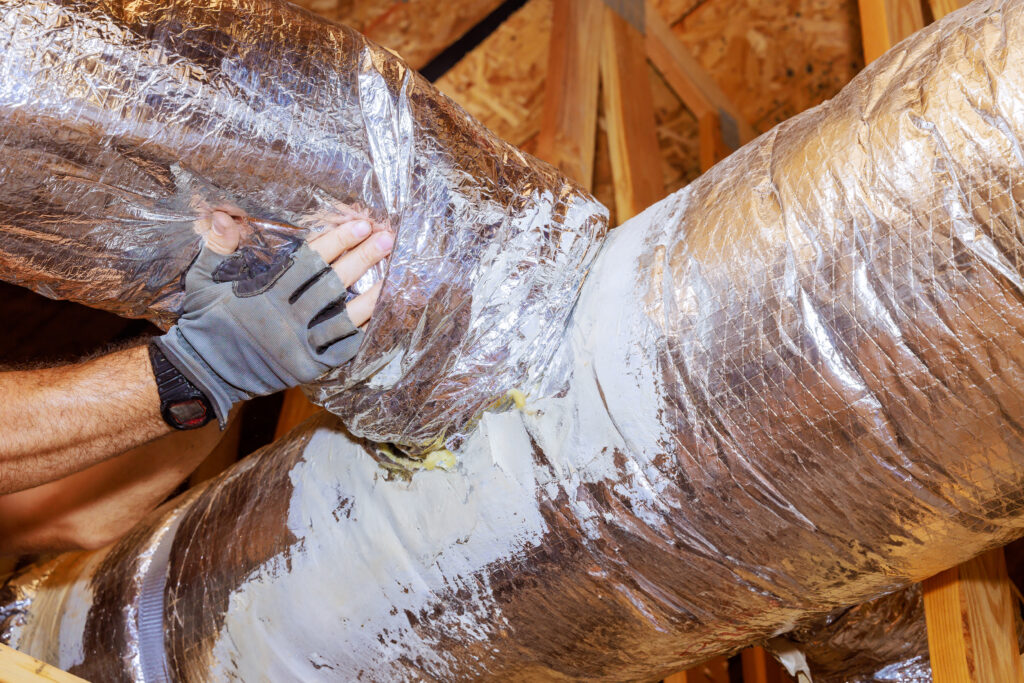
Ductwork is the delivery network for everything your air conditioner produces, and leaky ducts waste a substantial share of that output before it ever reaches a room. Studies of residential duct systems routinely find leakage rates in the range of twenty to thirty percent, which means a meaningful portion of your cooled air is dumping into an attic that nobody lives in. That loss forces longer run times, and longer run times translate directly into more wear on the compressor, blower motor, contactor, and capacitor. In Florida attics, the return side of the system is the bigger concern, because any leak on that side actively pulls superheated, dusty air into the equipment. Sealing those leaks with mastic or approved foil tape reduces load, lowers utility bills, and cuts the number of operating hours the system logs each season. Duct tape, despite the name, dries out and fails in attic heat and should never be used for this work.
Insulation condition deserves the same attention as sealing, particularly on flexible duct that has been in place for a decade or more. Compressed, torn, or sagging duct insulation allows heat gain along the entire run, so air that left the air handler at 55 degrees may arrive at the register several degrees warmer. Flex duct that has been crushed by attic storage, pinched around a truss, or left with long sagging loops creates severe airflow restriction at those points. Straightening runs, supporting them properly with wide straps every few feet, and replacing damaged sections restores the design airflow the manufacturer intended. Disconnected boots at the ceiling register are also common after years of attic traffic, and they show up as one room that never cools no matter how low the thermostat goes. Fixing those problems eliminates the temptation to lower the thermostat setting for the whole house just to satisfy a single uncomfortable bedroom.
Duct cleanliness plays a role in longevity too, though it works differently than most homeowners expect. Debris inside supply runs eventually reaches the register, but debris on the return side reaches the blower wheel and the evaporator coil, and that is where it does real damage. A blower wheel caked with dust loses its ability to move air efficiently because the fins can no longer grip and throw air the way clean fins do. A dirty evaporator coil restricts airflow while simultaneously insulating the fins against heat transfer, which drives up head pressure and stresses the compressor. In a humid climate, that same dust holds moisture and creates conditions for microbial growth, which affects both the equipment and the air your family breathes. Addressing duct contamination protects the two most airflow sensitive components in the entire system.
Vent and Return Habits That Make Your HVAC System Last Longer
Closing vents in unused rooms feels like a smart way to save money, and it is one of the most persistent myths in home comfort. Residential systems use a fixed speed or variable speed blower matched to a specific duct design, and closing registers does not reduce the amount of air the blower attempts to move. Instead, it raises static pressure throughout the duct system, which reduces total airflow, increases duct leakage at every seam, and pushes the evaporator coil toward freezing. Rooms with closed vents also lose the dehumidification that constant air movement provides, and in Florida that invites moisture problems behind furniture and inside closets. The better approach is to leave supply registers fully open and balance comfort through duct design, damper adjustment, or a zoning system installed by a professional. If certain rooms are consistently uncomfortable, that is a design issue worth diagnosing rather than a problem to solve by shutting off airflow elsewhere.
Return air needs just as much respect as supply air, and returns are far easier to accidentally block. A sofa pushed against a wall return, a bookshelf placed in front of a hallway grille, or a stack of storage boxes in a closet housing the air handler all choke the system. Return grilles need clear space in front of them, and interior doors need a path for air to travel back toward the return when they are closed. Undercutting doors by roughly three quarters of an inch, adding transfer grilles, or simply leaving bedroom doors open during heavy cooling hours all help pressures equalize. When a bedroom door closes and the room has no return path, that room pressurizes, supply airflow drops, and the rest of the house goes slightly negative, which pulls humid outdoor air through every gap in the building envelope. That extra humidity becomes additional load on your equipment every hour it runs.
The outdoor unit needs breathing room as well, and landscaping tends to creep in over the years without anyone noticing. Manufacturers generally call for at least two feet of clearance on all sides of the condenser and five feet of open space above it. Shrubs, fence panels, mulch piles, and stacked patio furniture trap the hot air the unit is trying to reject, and recirculating that heat drives head pressure up and efficiency down. Rinse the outdoor coil gently with a garden hose from the inside out when you can safely do so, and keep grass clippings from blowing into the fins during mowing. Never use a pressure washer on condenser fins, because the aluminum bends easily and flattened fins permanently restrict airflow. A few minutes of yard maintenance each month keeps the unit rejecting heat the way it was designed to.
Maintenance Steps That Make Your HVAC System Last Longer
Airflow habits handle the part of the job a homeowner can see, but a significant share of what determines equipment life happens inside panels that should stay closed between service visits. Refrigerant charge, electrical connection integrity, capacitor health, contactor condition, and drain system function all require tools and training to evaluate properly. These are also the items that fail quietly, degrading performance for months before anyone notices a comfort problem. A system running on a slightly low charge does not announce itself; it simply runs longer, sweats the suction line, and slowly overheats the compressor windings. Professional maintenance twice a year catches these conditions while they are still adjustments rather than replacements. In a climate where the cooling season stretches from March into November, that inspection cadence is not excessive.
Coil Cleaning Makes Your HVAC System Last Longer
Both coils in your system depend on clean, unobstructed surfaces to move heat, and both collect debris in predictable ways. The outdoor condenser coil pulls in pollen, grass, dryer lint, cottonwood fluff, and road dust every hour it operates, and that layer acts as insulation on the exact surface that needs to shed heat. When the condenser cannot reject heat efficiently, discharge pressure climbs, the compressor draws more current, and operating temperatures rise well beyond design. High head pressure is one of the leading causes of premature compressor failure, and it is almost entirely preventable with routine coil cleaning. A professional cleaning uses an appropriate coil cleaner and a controlled rinse that reaches through the full depth of the fin pack rather than just washing the outer surface. Homes near heavy traffic, agricultural fields, or construction activity often need this done more than once a year.
The indoor evaporator coil collects a different mix, mostly fine dust that slipped past the filter, and it holds that dust in place because the coil surface stays wet during the cooling season. Wet dust turns into a felted mat between the fins, and that mat restricts airflow while blocking heat transfer at the same time. The result is lower capacity, weaker dehumidification, longer run cycles, and eventually ice formation on the coil face. Because the coil sits inside the air handler, it is not something a homeowner can inspect casually, which is exactly why it goes unnoticed for so long. A technician can pull the access panel, evaluate the coil condition, and clean it before contamination reaches the point of requiring removal. Keeping the evaporator clean also keeps the condensate flowing to the drain pan instead of collecting in debris and spilling over the edge.
Coil care pays off in a way that shows up on both your comfort and your utility bill. A clean system pulls moisture out of the air effectively, which means the house feels comfortable at a higher thermostat setting and the equipment runs fewer total hours. Fewer hours means fewer compressor starts, less contactor arcing, less capacitor stress, and less blower bearing wear across the life of the system. It also means the refrigerant circuit operates within its designed pressure and temperature envelope rather than at the edges of it. Every component in a sealed system lasts longer when it operates near design conditions, and coil cleanliness is the biggest lever for keeping it there. Ready to schedule professional coil cleaning and a full system check? Click here for our air conditioning service.

Drain Line Care Makes Your HVAC System Last Longer
A residential air conditioner in Central Florida can pull several gallons of water out of the air on a humid day, and every drop of it has to leave the house through the condensate drain. That constant flow of water through a dark PVC line creates ideal conditions for algae and biological slime, which build into a plug that stops drainage entirely. When the line clogs, water backs into the drain pan, the float switch opens, and the system shuts down, usually on the hottest afternoon of the week. Systems without a working float switch do something worse: they keep running while water overflows into the air handler cabinet, the ceiling, or the closet floor. Rusted cabinets, ruined drywall, and soaked insulation are expensive problems that started as a preventable clog. Drain maintenance is one of the clearest examples of a small task protecting a large investment.
Homeowners can handle basic drain upkeep between service visits without much difficulty. Pouring a cup of distilled white vinegar into the cleanout access every month or two slows biological growth inside the line and keeps the passage open. Avoid bleach in systems with metal drain pans or nearby metal components, because it accelerates corrosion over time. Check the outdoor termination point of the drain line periodically and confirm water is actually exiting during a cooling cycle, since a dry line on a humid day is a warning sign. Look at the secondary drain pan under the air handler if your unit sits in an attic, because standing water there means the primary drain has already failed. Catching a partial clog early takes minutes; catching it after a ceiling stain appears takes considerably more.
Professional drain service goes further than a homeowner treatment can. A technician clears the line with nitrogen or a vacuum, verifies the trap is correctly configured for the equipment, and confirms the float switch actually interrupts the circuit when triggered. Improperly built traps are surprisingly common, and a trap that is too shallow allows the blower to either hold water in the line or pull air backward through it. Both conditions cause intermittent drainage problems that come and go with no obvious pattern. A technician also inspects the pan itself for rust, cracks, and standing water that indicates a slope problem in the line. Getting the drainage system right protects the air handler, the coil, and everything below it in the house.
Electrical and Refrigerant Checks Make Your HVAC System Last Longer
Electrical components in an HVAC system live a hard life, cycling on and off thousands of times per season under Florida heat. The run capacitor is a common early casualty, and a weak capacitor forces the compressor and fan motor to draw excessive current during every start. That extra current generates heat inside the motor windings, and heat is what ultimately kills motors and compressors. Testing capacitance during maintenance reveals a failing capacitor while it is still a low cost part rather than the cause of a much larger failure. Contactors pit and burn over time as well, and a pitted contactor delivers inconsistent voltage that stresses everything downstream. Replacing a worn contactor during a scheduled visit is far cheaper than replacing the compressor it damaged.
Loose electrical connections deserve specific mention because they are both common and destructive. Thermal cycling causes terminals and lugs to expand and contract daily, and over years that movement works connections loose. A loose connection creates resistance, resistance creates heat, and heat eventually melts insulation, burns terminals, or opens the circuit entirely. Technicians check and tighten these connections and measure voltage drop across components to find developing problems before they cause a failure. Surge protection at the equipment adds another layer of defense, which matters in a region that sees frequent lightning through the summer storm season. Modern systems carry control boards and variable speed drives that are far more sensitive to voltage events than older equipment was.
Refrigerant charge is the last piece, and it is one that only a licensed technician should evaluate or adjust. A sealed system does not consume refrigerant, so a low charge always means a leak somewhere in the circuit that needs to be found and repaired. Running undercharged causes low suction pressure, poor oil return, and inadequate motor cooling for the compressor, all of which shorten its life dramatically. Running overcharged is equally damaging, raising head pressure and risking liquid refrigerant reaching the compressor. Technicians verify charge using superheat or subcooling measurements appropriate to the metering device rather than guessing from pressure alone. Correct charge keeps the system operating within its design envelope, and that single condition does more for compressor longevity than almost anything else on the maintenance checklist.
Why You Need Professional Maintenance to Make Your HVAC System Last Longer
Homeowner care handles the visible half of the equation, and professional maintenance handles the half that determines how many years you get out of the equipment. Manufacturers write annual professional service into their warranty terms, and skipping it can leave you holding the bill on a covered failure. Twice yearly visits fit the Central Florida climate well, with a spring visit that prepares the cooling side for a long season and a fall visit that verifies heating operation before the first cold snap. September is a natural time to schedule, since the system has just finished the hardest months of the year and any wear from that stretch is easy to catch now. Regular service also builds a documented history of your equipment, which makes future diagnosis faster and warranty claims simpler.
Professional Tune Ups Make Your HVAC System Last Longer
A thorough maintenance visit is a systematic inspection rather than a quick look and a filter swap. The technician measures temperature split across the coil, checks static pressure across the air handler, tests capacitors and contactors, inspects the blower wheel, verifies refrigerant charge, clears the condensate drain, and confirms safety controls function correctly. Each of those measurements tells a story about how the system has been operating and where it is beginning to drift from design. Small deviations caught early are adjustments; the same deviations ignored for two seasons become component failures. The value is not in any single check but in the pattern that emerges when the same system is measured year after year.
Scheduled maintenance also shifts repairs from emergency situations to planned ones. A capacitor showing degraded capacitance in October can be replaced on a routine visit at a routine price, instead of failing in July when the house is 88 degrees and everyone is uncomfortable. Planned work is cheaper, calmer, and far less disruptive to your household. It also keeps you from making a rushed replacement decision under pressure, which is how homeowners end up with equipment that does not fit their home well.
Efficiency is the immediate benefit that most people notice first. A properly maintained system uses noticeably less energy than one running with a dirty coil, a marginal charge, and restricted airflow, and that difference shows up on the power bill month after month. Lower energy use also means shorter run times, and shorter run times mean less accumulated wear on every moving part. Comfort improves alongside efficiency, with better humidity control and more even temperatures throughout the house. Want a full picture of what professional service covers? Click here to see all of our HVAC services.
Smart Thermostat Settings Make Your HVAC System Last Longer
How you operate the thermostat has a direct effect on how many hours your equipment logs each year. Dramatic setbacks work well in dry climates but backfire in Florida, because a house allowed to warm and humidify all day requires a long, hard recovery cycle to bring conditions back down. Moderate setbacks of two to four degrees give you real savings without asking the system to fight both temperature and accumulated moisture at once. A programmable or smart thermostat handles this automatically and starts recovery early enough that the system never has to run at full tilt for hours. Consistency, not extremes, is what keeps run times reasonable.
Fan settings matter more than most homeowners expect. Leaving the fan in the ON position runs the blower continuously, and during humid weather that continuous airflow re evaporates moisture sitting on the coil and sends it back into the house. The AUTO setting allows moisture to drain properly between cycles and reduces unnecessary blower motor hours. Some variable speed systems use programmed circulation modes that accomplish air mixing without the humidity penalty, and those are worth using where available. Choosing the right fan mode is a free adjustment with a real effect on both comfort and equipment life.
Thermostat placement and condition also influence how hard your system works. A thermostat mounted on an exterior wall, in direct sunlight, or near a supply register reads inaccurate temperatures and causes short cycling or extended run times. Aging thermostats drift out of calibration, and a unit that reads three degrees off has been quietly overcooling your home for years. Modern thermostats offer better accuracy, humidity awareness, filter reminders, and remote monitoring that catches problems while you are away. Thinking about upgrading your controls? Click here for our thermostat service.
Why Choose Legion Cooling to Make Your HVAC System Last Longer
Legion Cooling is a family owned, faith driven company operating out of 1334 Winter Green Way in Winter Garden, and we serve homeowners across Horizon West, Windermere, Clermont, Ocoee, Apopka, Winter Park, Kissimmee, and the surrounding communities. We built this business on honest expert service, which means our technicians tell you what your system actually needs and what it does not. Every quote we write is straightforward with no hidden fees, so you know the cost before any work begins. We are licensed and insured, and financing is available for homeowners facing larger repairs or replacements.
Our approach to maintenance reflects how we would service our own homes. We measure, document, and explain, and we show you what we found rather than asking you to take our word for it. When a part is nearing the end of its life, we say so plainly and let you decide how to proceed. When a system has years of service left in it, we tell you that too, because pushing unnecessary replacements is not how we operate.
We are committed to getting it done right every time, from a routine filter and drain check to a full system replacement. Local ownership means we understand exactly what Central Florida humidity, storm season, and long cooling seasons do to equipment over time. Call us at (321) 316-2422 or email info@legioncooling.com to schedule maintenance and get more years out of the system you already own.