
Why Your AC Short Cycles and What It Means
If your air conditioner turns on, runs for a few minutes, and shuts back off before your home ever feels cool, you are dealing with a problem called short cycling. Short cycling is one of the most common AC complaints homeowners face during the brutal Florida summer, and it is never something to ignore. Every time your AC short cycles, it puts extra strain on the compressor, drives up your electric bill, and leaves your home humid and uncomfortable. A healthy air conditioner should run in longer, steady cycles that fully cool your home and remove moisture from the air. When those cycles get cut short over and over, something inside the system is wrong. The causes range from simple fixes like a dirty air filter to serious problems like a failing compressor or refrigerant leak. Understanding why your AC short cycles helps you catch small issues before they become expensive repairs. In this post, we break down the most common causes of AC short cycling, what each one means for your system, and when it is time to call a professional.
Common Causes of AC Short Cycling in Florida Homes
AC short cycling almost always traces back to a handful of root causes, and knowing them helps you troubleshoot faster. Some causes restrict airflow, which makes the system overheat and shut down early. Other causes trick the thermostat into thinking the home is already cool when it is not. Refrigerant problems are another major culprit, especially in older systems that have developed slow leaks. An oversized air conditioner can also short cycle from the day it is installed, because it cools the air too fast without ever completing a proper cycle. Electrical faults, frozen coils, and clogged drain lines round out the list. Each cause leaves its own clues, and we cover the three biggest ones below. Is your AC short cycling right now? Click here for our air conditioning repair service and get it fixed fast.
Dirty Air Filters and Airflow Problems Cause AC Short Cycling
A clogged air filter is the single most common reason an AC short cycles, and it is also the easiest to fix. Your air conditioner needs a steady flow of warm indoor air moving across the evaporator coil to work properly. When the filter is packed with dust, pet hair, and debris, that airflow drops dramatically. The coil gets too cold without enough warm air passing over it, and ice begins to form on the surface. Once the coil freezes, the system cannot absorb heat, and safety controls shut the unit down to protect it. The ice melts, the system restarts, and the cycle repeats over and over. This constant stopping and starting is textbook short cycling, and it all started with a two dollar filter.
Airflow problems go beyond the filter, and any restriction in the system can trigger the same short cycling behavior. Closed or blocked supply vents force pressure to build inside the ductwork, which reduces the volume of air moving through the system. Furniture pushed against return grilles starves the air handler of the air it needs to breathe. Crushed, disconnected, or undersized ductwork creates the same problem behind your walls where you cannot see it. Dirty blower wheels slow down air movement even when everything else looks clean. Each of these issues makes the evaporator coil run colder than designed. The result is freezing, tripped safety switches, and an AC that short cycles all summer long. Airflow is the lifeblood of your cooling system, and anything that chokes it will cause trouble.
The fix starts with checking your air filter every 30 days during the Florida cooling season. Homes with pets, allergies, or heavy dust should replace filters monthly without exception. Walk through your home and confirm every supply vent is open and unblocked, even in rooms you rarely use. Pull furniture, curtains, and rugs away from return grilles so the system can pull air freely. If the filter is clean and vents are open but the short cycling continues, the problem may be hiding in your ductwork. Leaky or damaged ducts waste up to 30 percent of the air your system moves, according to ENERGY STAR. A professional duct inspection can find restrictions and leaks you cannot see. Suspect a duct problem? Click here for our air duct services and let us take a look.
Refrigerant Leaks Make Your AC Short Cycle
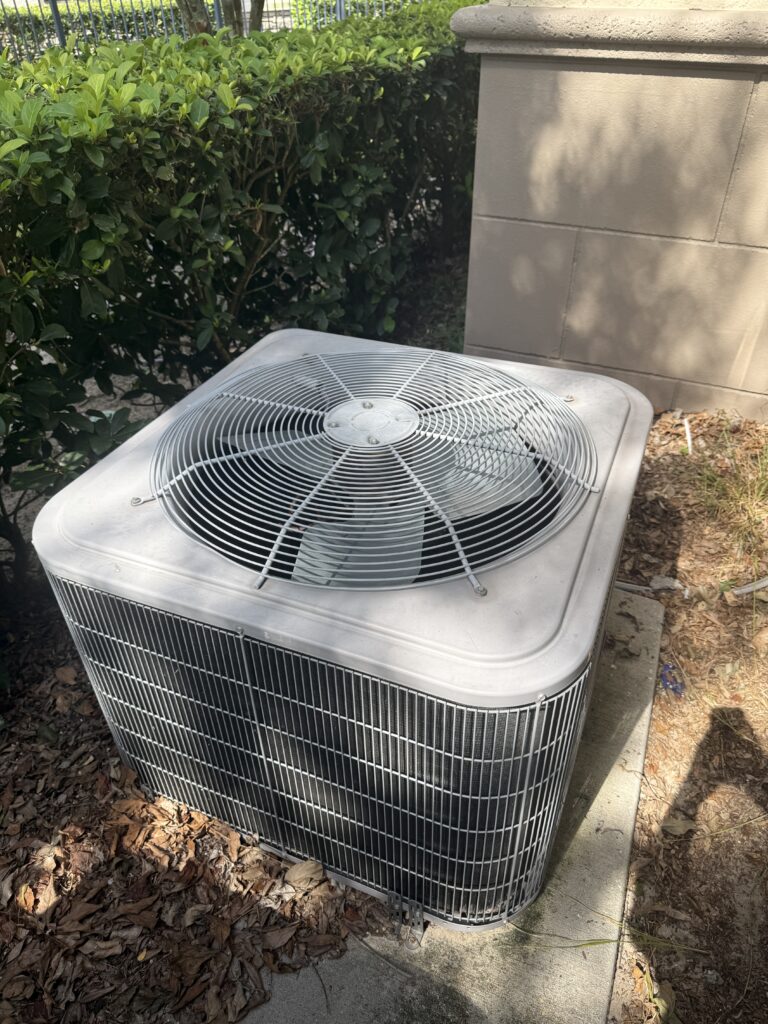
Low refrigerant is one of the most serious causes of AC short cycling, and it never fixes itself. Refrigerant is the chemical that absorbs heat from your indoor air and carries it outside. Your system was charged with an exact amount at installation, and it should hold that charge for the life of the unit. When a leak develops in the coils, line sets, or fittings, the refrigerant level slowly drops. Low refrigerant causes pressure inside the system to fall below safe operating limits. Most modern air conditioners have a low pressure switch that shuts the compressor down when this happens. The system rests, pressure recovers slightly, and the unit tries to start again. That start, shutdown, restart pattern is short cycling driven by a refrigerant leak.
Refrigerant leaks produce warning signs beyond the short cycling itself, and Florida homeowners should know what to watch for. Hissing or bubbling sounds near the indoor or outdoor unit often point to escaping refrigerant. Ice forming on the copper lines or the evaporator coil is a classic symptom of a low charge. Your home may feel warm and sticky even when the AC runs constantly, because low refrigerant cripples the system’s ability to remove humidity. Electric bills climb as the unit works harder and longer to hit the thermostat setting. Vents may blow air that feels cool but never cold. Some homeowners notice the outdoor unit running while the indoor air barely changes temperature. Any combination of these signs alongside short cycling points strongly toward a leak.
Fixing a refrigerant leak is not a DIY job, and topping off the charge without repairing the leak just wastes money. Federal law requires an EPA certified technician to handle refrigerant, so this repair always requires a professional. A qualified tech will pressure test the system, locate the leak with electronic detectors or dye, and repair or replace the damaged component. Only then should the system be recharged to the manufacturer’s exact specification. Running an AC low on refrigerant for weeks or months can destroy the compressor, which is the most expensive part in the entire system. Catching a leak early often means a few hundred dollars in repairs instead of thousands for a compressor or full replacement. If your AC short cycles and shows any leak symptoms, shut it off and schedule service quickly. Acting fast protects the equipment and your wallet.
Thermostat Issues That Lead to AC Short Cycling
Sometimes the air conditioner is perfectly healthy and the thermostat is the real reason your AC short cycles. The thermostat is the brain of your cooling system, and it decides when the AC turns on and off. If that brain gets bad information, it sends bad commands. A thermostat mounted in direct sunlight reads the room hotter than it really is, then reads it cooler once shade returns, causing rapid on and off commands. A thermostat placed near a supply vent gets blasted with cold air the moment the system starts. It thinks the whole house has cooled, so it shuts the AC down within minutes. The rest of your home stays hot while the system short cycles endlessly. Placement matters just as much as the thermostat itself.
Internal thermostat problems cause the same short cycling symptoms even when placement is perfect. Old thermostats with worn contacts or failing sensors send erratic signals to the air handler and condenser. Dying batteries make digital thermostats behave unpredictably, sometimes dropping the call for cooling mid cycle. Loose or corroded low voltage wiring between the thermostat and the equipment can break the connection intermittently. Dust buildup inside the thermostat housing interferes with temperature sensing on older models. Even a thermostat that was bumped out of level can misread the room on certain mechanical designs. These faults make the AC start and stop for no apparent reason. Homeowners often replace expensive parts before discovering a 50 dollar thermostat was the culprit all along.
Start troubleshooting with the simple stuff before assuming the worst. Replace the thermostat batteries and see if the short cycling stops. Check that the thermostat sits on an interior wall away from windows, vents, lamps, and kitchen heat. Gently remove the cover and look for dust, loose wires, or corrosion on the terminals. If your thermostat is more than ten years old, an upgrade is a smart investment regardless of the short cycling. Modern smart thermostats maintain tighter temperature control, learn your schedule, and can cut cooling costs noticeably in a hot climate like Central Florida. A professional can confirm correct wiring, placement, and calibration during installation. Ready for an upgrade? Click here for our thermostat services and get accurate, reliable control of your comfort.
What AC Short Cycling Means for Your System and Your Wallet
Short cycling is more than an annoyance; it actively damages your air conditioner and inflates your energy costs every single day it continues. Air conditioners draw the largest surge of electricity during startup, so a system that starts dozens of extra times per day burns far more power than one running normal cycles. All that stopping and starting also hammers the compressor, contactor, and capacitors with stress they were never designed to handle. Short cycles never run long enough to properly dehumidify your home, which is a serious problem in humid Winter Garden summers. Excess indoor humidity feeds mold, warps wood, and makes your home feel warmer than the thermostat reads. Comfort suffers, bills climb, and the lifespan of your equipment shrinks month after month. Understanding these consequences shows why short cycling deserves immediate attention.
AC Short Cycling Raises Your Energy Bills
Every startup is the most expensive moment in your air conditioner’s cycle, and short cycling multiplies those moments dramatically. When the compressor kicks on, it draws a surge of electricity several times higher than its normal running load. A healthy AC pays that startup cost a few times per hour, then settles into efficient steady operation. A short cycling AC pays it constantly, sometimes every five to ten minutes, all day long. Those surges add up fast on your electric meter. Florida homeowners already spend a large share of their utility budget on cooling from May through October. Short cycling can push those bills 20 to 30 percent higher without delivering any extra comfort. You are paying more money for worse cooling, which is the worst deal in home ownership.
The efficiency loss goes deeper than startup surges, because air conditioners need time to reach peak performance. During the first several minutes of a cycle, the system is still building pressure and has not hit its rated efficiency. Short cycles trap the unit in that inefficient warmup phase permanently. The system never reaches the steady state where it removes heat and humidity at its best rate. Meanwhile, the temperature swings between cycles force the AC to fight the same heat over and over. Humid air left behind makes your home feel warmer, so many homeowners lower the thermostat, which makes the problem worse. The cycle of waste feeds itself until the root cause gets fixed. Ignoring it literally costs you money every hour of every hot day.
Fixing the underlying cause almost always pays for itself through lower energy bills. A clean filter and clear vents cost almost nothing and can restore normal cycles immediately. A refrigerant repair or thermostat replacement costs more up front but stops the daily bleeding on your electric bill. Regular professional maintenance catches airflow restrictions, low charge, and electrical wear before they trigger short cycling in the first place. Tuned systems also simply run cheaper, with clean coils and correct charge delivering the efficiency the manufacturer promised. Think of maintenance as an investment with a measurable return every billing cycle. Central Florida summers are long, and small efficiency gains compound over six months of heavy cooling. Stopping short cycling is one of the fastest ways to cut summer energy costs.
AC Short Cycling Shortens Your Air Conditioner Lifespan
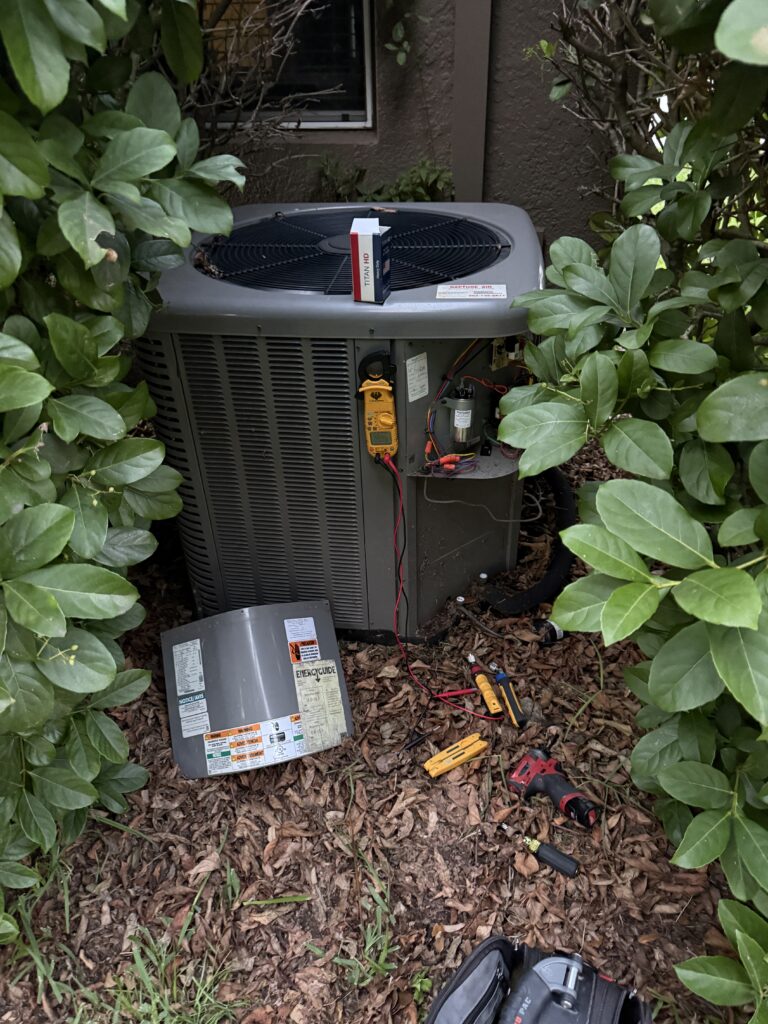
Your compressor is the heart of your air conditioner, and short cycling attacks it directly. Compressors are built to start a limited number of times over their lifespan, then run in long steady stretches. Each startup sends a jolt of electrical and mechanical stress through the motor windings, bearings, and valves. Short cycling can triple or quadruple the number of daily starts, burning through that lifetime start budget years ahead of schedule. Oil inside the compressor also needs runtime to circulate and lubricate moving parts properly. Short cycles never give the oil time to do its job, so components wear dry. Heat builds in the windings faster than it can dissipate between rapid starts. Eventually the compressor fails, and compressor replacement often costs so much that full system replacement makes more sense.
The damage spreads to electrical components long before the compressor gives out. Capacitors, which provide the boost of power for each startup, degrade faster under constant cycling and are a top summer failure item in Florida. Contactors, the switches that send power to the compressor, pit and burn from repeated arcing every time the system starts. Relays, fan motors, and control boards all absorb extra wear from the relentless on and off pattern. Each of these failures means a service call, a part, and a hot uncomfortable wait for repair. A system that should have needed one or two minor repairs over a decade instead needs several. Repair costs stack up while the equipment ages prematurely. Short cycling quietly converts a 15 year air conditioner into an 8 year air conditioner.
Protecting your investment means treating short cycling as an urgent repair rather than a quirk. The average Central Florida AC replacement is a major expense, and every year of lifespan you preserve has real dollar value. Prompt diagnosis of short cycling usually reveals an affordable fix like a filter, capacitor, thermostat, or refrigerant repair. Waiting turns those small fixes into compressor failures and full replacements. Annual professional tune ups are the best insurance, because technicians measure refrigerant pressures, test electrical components, and verify airflow before problems snowball. Systems that receive regular maintenance routinely outlast neglected ones by five years or more. That difference is worth thousands of dollars to your household budget. Do not let a solvable problem retire your AC early.
AC Short Cycling Ruins Indoor Comfort and Air Quality
Cooling is only half of your air conditioner’s job; the other half is pulling humidity out of your indoor air. Dehumidification happens gradually as moist air passes over the cold evaporator coil during a long cooling cycle. Water condenses on the coil and drains away, leaving your air drier and more comfortable. Short cycles end before meaningful moisture removal ever happens. In a humid climate like Central Florida, that failure shows up fast. Your home starts to feel sticky and clammy even when the thermostat shows an acceptable temperature. Sheets feel damp, windows fog, and that muggy feeling never quite goes away. High indoor humidity makes 76 degrees feel like 80, so comfort collapses while the AC technically keeps running.
Sustained high humidity creates air quality problems that go beyond discomfort. Mold and mildew thrive when indoor relative humidity stays above 60 percent, and short cycling homes often sit well above that line all summer. Dust mites multiply in humid conditions, which worsens allergies and asthma symptoms for sensitive family members. Musty odors develop in closets, bathrooms, and carpets as microbial growth spreads. Wood floors, trim, and furniture absorb moisture and can warp or swell over time. The short runtime also means less air passes through your filter each day, so airborne dust and allergens stay suspended longer. Your whole home environment degrades in ways that a thermometer alone will never show. Families often blame allergies or the weather when the real problem is a short cycling air conditioner.
Restoring proper cycle length brings both comfort and air quality back in line. Once the AC runs full cycles again, humidity drops, temperatures even out between rooms, and that heavy sticky feeling disappears. Filtration improves as more air moves through the system each hour. For homes with ongoing humidity or allergy struggles, additional indoor air quality solutions can help even further. Whole home dehumidifiers, UV lights, and upgraded filtration work alongside your AC to keep air clean and dry. These upgrades matter most in Florida, where outdoor humidity pressures your home ten months a year. Breathing easier at home is worth the attention. Want cleaner, drier air in your home? Click here for our indoor air quality services.
Why You Need a Professional AC Short Cycling Diagnosis
Some short cycling causes are simple, but many require professional tools, training, and certification to diagnose correctly. Refrigerant handling is federally regulated, electrical testing carries real safety risks, and misdiagnosis wastes money on parts that were never the problem. A licensed technician can measure refrigerant pressures, test capacitors and contactors, inspect the coil, and verify thermostat operation in a single visit. That thorough approach finds the true root cause instead of masking symptoms. Fast professional diagnosis protects your compressor, lowers your bills, and restores comfort before the next heat wave hits. When your AC short cycles this summer, the smartest move is a prompt expert inspection.
Professional AC Short Cycling Repair Gets It Right the First Time
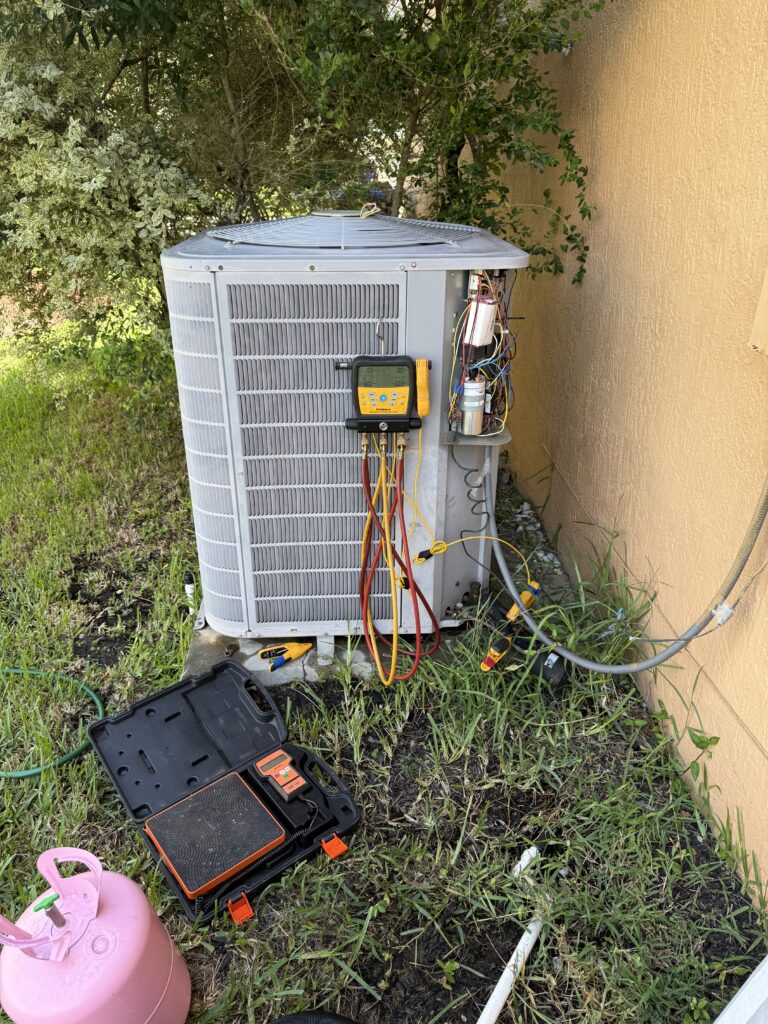
Guesswork is expensive when it comes to air conditioning repair. Homeowners who throw parts at a short cycling problem often replace thermostats, capacitors, and filters without ever touching the real cause. A trained technician follows a diagnostic process that isolates the fault with certainty. Gauges reveal exact refrigerant pressures, meters confirm electrical component health, and airflow measurements expose duct restrictions. The result is one accurate repair instead of three wrong guesses. Getting it right the first time saves money and gets your home cool again faster.
Professional repair also protects you from hidden secondary damage. Short cycling caused by a refrigerant leak, for example, may have already stressed the compressor or contaminated the system. A technician checks for that collateral damage during the repair visit. Frozen coils get properly thawed and inspected rather than just left to melt. Electrical connections get tightened and tested so the next failure is prevented, not just delayed. This complete approach is the difference between a repair and a temporary patch.
Timing matters enormously in a Florida July. Every day a short cycling AC keeps running, it wears components and inflates your electric bill. Waiting also risks total failure during the hottest stretch of the year, when repair schedules fill up fast. A quick professional visit ends the damage immediately. Most short cycling repairs are completed in a single appointment. Calling at the first sign of trouble is always the cheapest option.
AC Maintenance Prevents Short Cycling Before It Starts
The best short cycling repair is the one you never need. Annual professional maintenance addresses every major short cycling cause before it triggers a breakdown. Technicians clean coils, replace filters, check refrigerant charge, and test every electrical component under load. Weak capacitors get flagged before they fail on a 95 degree afternoon. Small refrigerant losses get caught while the leak is still repairable and cheap. Prevention keeps your cycles long, steady, and efficient all season.
Maintenance delivers benefits beyond preventing short cycling. Clean, tuned systems use less electricity every hour they run, which lowers bills across the entire cooling season. Manufacturers often require proof of regular maintenance to honor warranty claims, so skipping tune ups can void coverage you already paid for. Well maintained equipment also lasts years longer than neglected equipment. Each of those benefits alone justifies the modest cost of an annual visit. Together they make maintenance the highest value service in HVAC.
Central Florida systems work harder than air conditioners almost anywhere in the country. Ten months of cooling demand means wear accumulates fast, and spring or early summer tune ups keep systems ready for peak heat. Homeowners who maintain their equipment rarely face emergency calls in July and August. Those who skip maintenance make up most of the summer breakdown schedule. Choose which group you want to be in. A single yearly appointment is all it takes.
Why Choose Legion Cooling for Your AC Short Cycling Repair
Legion Cooling is a family owned, faith driven HVAC company serving Winter Garden and the greater Central Florida area. We are licensed, insured, and committed to honest expert service on every single call. Our technicians diagnose short cycling accurately and explain exactly what we find in plain language. You get straightforward quotes with no hidden fees, ever. We believe integrity is not a slogan; it is how we run our business every day. That commitment is why our neighbors trust us with their comfort.
We understand that AC problems never arrive at a convenient time or price. That is why Legion Cooling offers financing options to make necessary repairs and replacements manageable for your family budget. We serve homeowners across Winter Garden, Windermere, Ocoee, Clermont, Apopka, Kissimmee, and dozens of surrounding Central Florida communities. Our team is locally owned and operated, so you are calling neighbors, not a national call center. We show up on time, respect your home, and stand behind our work. Getting it done right every time is our promise.
Do not spend another sweltering week with an AC that starts and stops all day. Call Legion Cooling at (321) 316-2422 or email info@legioncooling.com to schedule your short cycling diagnosis. Visit us at 1334 Winter Green Way, Winter Garden FL 34787. Our team will find the real cause, fix it right, and restore steady, efficient cooling to your home. See what your neighbors say about us on our reviews page. Legion Cooling is ready to serve you with honesty and expertise.