Why Indoor Air Quality Gets Worse in Summer
Summer in Central Florida brings more than just hot weather; it brings a noticeable drop in the air quality inside your home. As temperatures climb and humidity levels rise, your air conditioner runs longer and harder, pulling in pollutants, allergens, and moisture that settle into every room. Many homeowners in Winter Garden, Clermont, and the surrounding areas notice their allergies flare up, dust accumulates faster, and rooms feel sticky even when the thermostat reads a cool number. The truth is that your indoor air during summer can be two to five times more polluted than the air outside, according to studies from the Environmental Protection Agency. This happens because windows stay shut, ventilation slows, and your HVAC system recirculates the same air repeatedly. Understanding the reasons behind this decline helps you take the right steps to protect your family, your furniture, and your home’s structure from the hidden dangers of poor summer air.
How Summer Heat and Humidity Affect Indoor Air Quality
The combination of heat and humidity creates the perfect storm for indoor air problems during the Florida summer. When humidity climbs above 60 percent, mold spores activate, dust mites multiply, and bacteria thrive on damp surfaces throughout your home. Your air conditioner works overtime to pull moisture from the air, but if it cannot keep up, that excess moisture lingers in carpets, drywall, and upholstery. Add in the volatile organic compounds released by paint, cleaning supplies, and new furniture during warm months, and the air inside your home becomes a complex mix of irritants. Homes in Horizon West, Windermere, and Dr. Phillips often see indoor humidity readings well above the comfort range during July and August.
How Humidity Makes Summer Indoor Air Quality Worse
Humidity is the silent driver behind most summer indoor air quality complaints, and it affects far more than just how the air feels on your skin. When moisture levels rise inside your home, dust mites reproduce at a much faster rate; these microscopic creatures thrive in humid conditions above 50 percent and feed on the dead skin cells found in bedding, carpets, and upholstered furniture. Their waste particles become airborne and trigger allergic reactions, asthma symptoms, and chronic respiratory irritation for sensitive household members. Mold also flourishes in humid environments, growing inside walls, around window frames, behind furniture, and within your HVAC ductwork where it remains hidden from view. Once mold establishes itself, it releases spores that travel through your home every time the air conditioner cycles on, spreading contamination room by room. Reducing humidity to the recommended range of 30 to 50 percent stops these problems before they start.
A properly sized air conditioner removes humidity as a natural part of the cooling process, but many systems in Central Florida homes are oversized for their square footage. An oversized unit cools the air quickly, then shuts off before it can pull enough moisture from the home; this leaves rooms feeling cold and clammy rather than crisp and dry. Short cycling also wears down compressors, evaporator coils, and capacitors much faster than normal operation, leading to expensive repairs down the road. A whole-home dehumidifier paired with a correctly sized HVAC system gives you precise control over humidity levels regardless of outdoor conditions. This combination keeps your air feeling fresh, protects your wood floors and cabinets from warping, and prevents the musty smell that plagues so many Florida homes. Need help managing humidity inside your home? Click here for our indoor air quality services.
Bathrooms, laundry rooms, and kitchens contribute significant moisture to your indoor environment every single day during summer. Hot showers release steam that travels through hallways, cooking releases water vapor from boiling pots and pans, and clothes dryers vent moisture if they are not properly sealed to the outside. Without strong exhaust fans pulling that moisture out of the house, it spreads to adjacent rooms and settles into porous materials throughout your living space. Sealing duct leaks, adding bath fans, and venting appliances correctly all play a role in keeping humidity manageable. Homeowners often overlook these small sources, yet they add up to gallons of water released into the air each week. Addressing them gives your HVAC system a fighting chance to maintain healthy humidity levels all season long.
How Heat Makes Summer Indoor Air Quality Worse
Heat itself is not a pollutant, but high indoor temperatures accelerate the release of harmful chemicals from common household products and building materials. Carpets, vinyl flooring, pressed wood furniture, and even some paints off-gas volatile organic compounds at higher rates when temperatures rise above 75 degrees. These chemicals include formaldehyde, benzene, and toluene; long-term exposure has been linked to headaches, dizziness, eye irritation, and more serious health effects over time. Newer homes tend to have higher VOC concentrations because modern construction materials and adhesives release these compounds for months or even years after installation. Cooler indoor temperatures slow this off-gassing process and reduce the overall concentration of chemicals in your breathing air. Maintaining a steady, moderate indoor temperature is one of the easiest ways to protect your family from invisible chemical exposure.
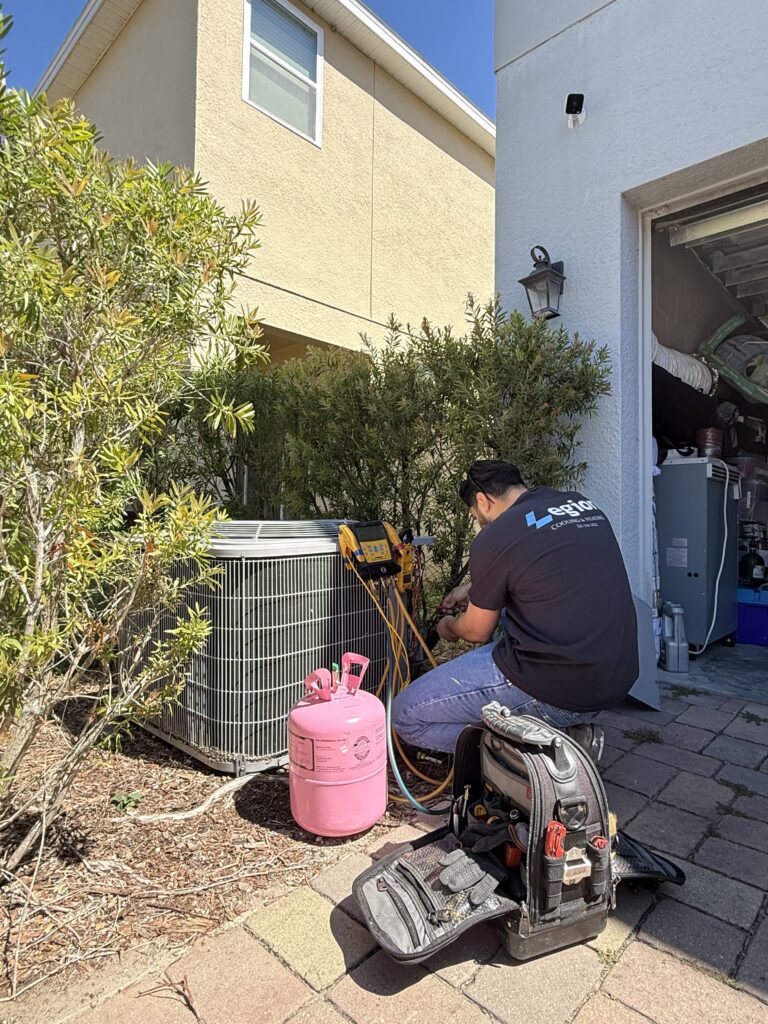
Heat also encourages bacterial growth on surfaces and inside your HVAC system, particularly in areas where condensation collects naturally. Evaporator coils, drain pans, and condensate lines all stay wet during summer operation, creating ideal conditions for biofilm to develop. This biofilm harbors bacteria and mold that get blown into your living spaces every time the blower fan runs. Regular maintenance that includes coil cleaning, drain line flushing, and pan treatment keeps these microbial populations under control. Without this attention, your air conditioner can actually become the primary source of pollution in your home rather than a tool for keeping the air clean. UV air purification systems installed inside the air handler offer an extra layer of protection by killing organisms before they spread.
Outdoor heat also drives more pollutants into your home through ventilation gaps, attic spaces, and poorly sealed windows and doors. Wildfire smoke, vehicle exhaust, pollen from Florida’s long growing season, and ozone all enter through these openings and accumulate inside. Your air conditioner pulls some of this contamination through its return air system, where it passes through whatever filter you have installed before being distributed throughout the house. A standard fiberglass filter catches only the largest particles, allowing fine dust, smoke, and allergens to pass through freely. Upgrading to a MERV 11 or MERV 13 pleated filter dramatically improves the air your family breathes during the worst summer pollution days. Sealing the building envelope reduces the burden on your filtration system and keeps outdoor contamination outside where it belongs.
How Closed Homes Make Summer Indoor Air Quality Worse
Florida homes stay sealed up tight from May through October because nobody wants to let the cool air escape or the hot, humid air inside. This energy-saving habit traps pollutants indoors with nowhere for them to go, allowing concentrations to build to levels that would shock most homeowners. Cooking fumes, cleaning chemical residues, pet dander, dust, and even the carbon dioxide we exhale all accumulate when fresh air cannot circulate naturally. Without intentional ventilation, your indoor air becomes increasingly stagnant and contaminated as the summer progresses. Many homeowners notice this as a stuffy or stale feeling that lingers no matter how clean the house looks. The solution is mechanical ventilation that introduces filtered outdoor air without sacrificing comfort or efficiency.
Energy recovery ventilators and heat recovery ventilators provide the answer for sealed Florida homes that need fresh air without humidity penalties. These devices pull in outdoor air, filter it, and transfer heat and moisture between the incoming and outgoing air streams. The result is a continuous supply of fresh, filtered air that does not overload your air conditioner or spike your humidity levels. ERVs work especially well in our climate because they remove moisture from incoming air during the muggy summer months. Pairing one with your existing HVAC system creates a complete indoor air quality solution that addresses pollution at its source. Homeowners who install these systems often report better sleep, fewer headaches, and noticeably reduced allergy symptoms within weeks.
Beyond mechanical ventilation, simple habits can help reduce the pollutant load inside a closed home during summer. Running bathroom exhaust fans during and after showers, using the kitchen range hood when cooking, and avoiding aerosol products all make a measurable difference. Storing cleaning supplies, paints, and solvents in a sealed container or detached garage prevents their fumes from circulating through the house. Vacuuming with a HEPA-equipped machine at least twice a week removes dust before it becomes airborne. Washing bedding in hot water weekly kills dust mites and removes their allergens from fabrics that touch your face for hours each night. These small changes work alongside professional indoor air quality equipment to give you the cleanest possible breathing environment.
Common Summer Indoor Air Quality Problems in Florida Homes
Florida homeowners face a unique set of indoor air quality challenges during the long summer season that residents of cooler climates rarely encounter. The combination of subtropical humidity, intense UV radiation, frequent thunderstorms, and aggressive pollen cycles creates conditions that test even the best HVAC systems. Mold, mildew, dust mites, and bacterial growth all reach peak activity between June and September across Orange, Lake, and Seminole counties. Pet dander becomes more concentrated as animals shed their summer coats and spend more time indoors avoiding the heat. Understanding which problems are most common in our region helps you recognize warning signs early and take action before health symptoms appear.
Common Summer Indoor Air Quality Problems With Mold and Mildew
Mold and mildew top the list of summer indoor air quality complaints across Central Florida, and for good reason given our climate. The combination of warm temperatures and persistent humidity creates ideal growth conditions inside walls, under sinks, in attics, around windows, and especially within HVAC systems themselves. Once mold establishes a colony, it releases millions of spores that travel through the air, settle on surfaces, and start new colonies in damp areas throughout the home. Some species produce mycotoxins that cause respiratory problems, skin irritation, and chronic fatigue even at low exposure levels. Black mold gets the most attention, but dozens of other species cause similar health issues and grow just as readily in Florida homes. Catching mold growth early prevents expensive remediation and protects your family from ongoing exposure.
Your HVAC system is one of the most common locations where mold grows undetected for months or years. Evaporator coils stay cold and wet during operation, drain pans collect standing water, and ductwork insulation can become saturated when condensation forms on cold surfaces. Once mold takes hold in any of these locations, every cycle of your air conditioner distributes spores throughout your home. Signs of HVAC mold include musty odors when the system runs, visible black or green growth around vents, and unexplained allergy symptoms that worsen indoors. Professional duct cleaning, coil treatment, and UV light installation address mold at its source within the system. Looking to clean out your ductwork? Click here for our air duct services.
Bathrooms, laundry rooms, and basements are other prime locations where mold takes hold during summer months. Caulk lines around tubs and showers develop dark staining that indicates mold growth between the caulk and the wall surface. Window sills collect condensation when cold interior air meets hot outdoor temperatures, creating wet spots that support fungal growth. Garages and storage areas often have higher humidity than living spaces, allowing mold to spread to stored items and adjacent walls. Addressing these issues requires both moisture control and physical removal of existing growth using appropriate cleaning methods. A whole-home dehumidifier combined with regular inspection of high-risk areas keeps mold from gaining a foothold anywhere in the home.
Common Summer Indoor Air Quality Problems With Allergens and Particulates
Pollen counts in Central Florida remain elevated throughout the summer due to the long growing season and the variety of plants that flower from spring through fall. Bahia grass, ragweed, oak, and various tropical species all release pollen that finds its way into homes through doors, windows, clothing, and pets. Once inside, pollen settles on surfaces and gets stirred back into the air with every footstep, breeze from a ceiling fan, or activation of the HVAC blower. People who feel fine outdoors often experience worse allergy symptoms indoors because of this concentration effect. Standard furnace filters catch only a small percentage of pollen particles, allowing most of them to circulate freely through living spaces. High-efficiency filtration and regular cleaning are the only effective defenses against pollen accumulation indoors.
Dust mites represent another major allergen concern during humid summer months across Florida. These microscopic arachnids live in mattresses, pillows, upholstered furniture, and carpets where they feed on shed human skin cells. A typical mattress can house millions of dust mites, and their fecal pellets and body fragments are potent allergens that trigger asthma, eczema, and chronic rhinitis. Mite populations explode when relative humidity stays above 50 percent, which describes most Florida homes without dedicated humidity control. Washing bedding weekly in water hotter than 130 degrees kills mites and removes allergens from fabric. Encasing mattresses and pillows in allergen-proof covers provides an additional barrier between sleepers and the mites living in the bedding.
Pet dander, dust, and skin cells round out the major particulate concerns inside summer homes. Cats and dogs shed their winter coats heavily during late spring and continue producing dander year-round. This dander becomes airborne with every movement and settles into every fabric surface in the home, including carpets, drapes, sofas, and bedding. Combined with everyday dust from skin cells, fabric fibers, and outdoor soil tracked indoors, the total particulate load in an average home can be substantial. HEPA air purifiers, MERV 13 furnace filters, and regular professional duct cleaning all play roles in reducing this load to safe levels. Without these measures, particulates accumulate steadily throughout the summer season.
Common Summer Indoor Air Quality Problems With Chemicals and Odors
Summer heat accelerates the release of volatile organic compounds from countless household sources that you might never suspect. New furniture, recently painted rooms, vinyl flooring, particleboard cabinets, and even some types of insulation all emit VOCs continuously. Cleaning products, air fresheners, scented candles, and personal care items add more chemicals to the indoor air mix every day. Pesticides used around the perimeter of homes during summer mosquito season can migrate inside through cracks and openings. All of these sources combine to create a chemical cocktail that affects everyone in the home, especially children, elderly residents, and people with chemical sensitivities. Reducing chemical exposure starts with choosing low-VOC products and increasing ventilation whenever possible.
Cooking activities release a surprising amount of pollution into indoor air during summer months. Gas stoves emit nitrogen dioxide and carbon monoxide directly into the kitchen, while all cooking methods release fine particles, water vapor, and various organic compounds. Without strong range hood ventilation that vents to the outside, these pollutants accumulate and spread to adjacent rooms. Frying, grilling, and high-heat cooking generate the most particulate pollution, while simmering and boiling release more moisture. Running the range hood whenever you cook, even for quick tasks, dramatically reduces kitchen air pollution. Outdoor grilling moves the worst pollution outside entirely during the most pleasant evening hours.
Florida’s thunderstorm season brings another chemical concern in the form of ozone that enters homes through windows, doors, and ventilation systems. Ground-level ozone forms when sunlight reacts with vehicle emissions and other pollutants, reaching peak concentrations on hot, sunny afternoons. Ozone irritates the lungs, worsens asthma, and damages respiratory tissue with repeated exposure. While whole-house air sealing helps keep ozone out, mechanical ventilation systems with carbon filtration provide better long-term protection. Activated carbon absorbs ozone, VOCs, and odors that mechanical filtration cannot capture. Installing carbon filters alongside particulate filters creates a more complete defense against the full range of summer indoor air pollutants.
Why You Need Professional Indoor Air Quality Services This Summer
Improving indoor air quality during a Florida summer requires more than just changing your filter and hoping for the best. The combination of high humidity, intense pollen, persistent mold pressure, and chemical accumulation calls for a comprehensive approach that addresses each problem at its source. Professional indoor air quality services include diagnostic testing, equipment selection, expert installation, and ongoing maintenance that homeowners simply cannot replicate on their own. Legion Cooling has helped families across Winter Garden, Clermont, Windermere, Horizon West, and the greater Orlando area breathe cleaner air for years. Our team understands the unique challenges of Florida’s climate and recommends solutions that match each home’s specific needs.
Why You Need Professional Indoor Air Quality Testing
Professional indoor air quality testing tells you exactly what you are dealing with inside your home rather than leaving you to guess. Trained technicians measure humidity, temperature, particulate levels, VOC concentrations, and check for biological contaminants in key areas of the home. This testing identifies hidden problems like duct leakage, mold growth in concealed spaces, and equipment that is not performing as it should. Armed with real data, you can make informed decisions about which upgrades will deliver the biggest improvement for your investment. Guessing leads to wasted money on solutions that do not address the actual problem in your home. Testing gives you the roadmap to genuinely cleaner air.
Beyond the initial assessment, follow-up testing verifies that the solutions installed are actually working as intended. Some indoor air quality problems require multiple interventions before measurable improvement appears, and testing helps confirm progress along the way. Homeowners who skip this verification step often spend money on equipment without ever knowing if it solved the original problem. Professional testing also documents conditions that might be important for health concerns, real estate transactions, or insurance claims down the road. A trusted local HVAC company keeps these records for you and references them during future service visits. This continuity of information makes long-term air quality management much more effective.
Testing also reveals seasonal patterns that affect how your home behaves throughout the year. Summer humidity issues might point to undersized dehumidification, while winter dryness might indicate excessive ventilation or air leakage. Pollen spikes during specific weeks of the year correlate with outdoor conditions and tell you when to be most vigilant about filtration. Understanding these patterns lets you adjust your indoor air quality strategy throughout the year for consistent comfort and health. Ready to find out what is in your air? Click here for our indoor air quality services.
Why You Need Professional Indoor Air Quality Equipment Installation
Modern indoor air quality equipment includes UV light purifiers, whole-home dehumidifiers, media filters, ERVs, and electronic air cleaners that work together as an integrated system. Each piece has specific installation requirements regarding location, electrical connections, drainage, and integration with the existing HVAC system. Improper installation reduces effectiveness, voids warranties, and can even create new problems like condensation damage or airflow restrictions. Professional installers understand the engineering behind each device and place them where they deliver maximum benefit. They also size equipment correctly based on the home’s square footage, occupancy, and existing air quality conditions. Cutting corners on installation costs more in the long run than doing it right the first time.
The connection between indoor air quality equipment and your existing HVAC system requires careful attention to airflow, static pressure, and electrical load. Adding restrictive filters or large media cabinets without addressing blower capacity can starve the system of airflow, causing comfort and efficiency problems. Whole-home dehumidifiers need proper ducting to remove moisture without short-cycling the air conditioner. UV lights must be positioned to actually irradiate the coil surface or air stream they are meant to treat. Professional installers handle these technical details so your equipment performs as advertised. They also balance the system after installation to ensure consistent comfort throughout every room of the home.
Ongoing maintenance keeps indoor air quality equipment functioning at peak performance throughout its service life. UV bulbs lose intensity over time and need replacement on a regular schedule even when they still appear to be working. Filters need changing at intervals based on actual loading rather than arbitrary calendar dates. Dehumidifiers require coil cleaning, drain inspection, and refrigerant checks just like your air conditioner does. A professional maintenance plan includes all these tasks on the right schedule for your specific equipment. This proactive approach catches small issues before they affect your air quality or damage the equipment.
Why Choose Legion Cooling for Your Summer Indoor Air Quality Needs
Legion Cooling is a family owned and faith driven HVAC company that has served Winter Garden and the surrounding Central Florida communities with honest expert service for years. Our technicians are licensed, insured, and trained on the latest indoor air quality technologies from the leading manufacturers in the industry. We provide straightforward quotes with no hidden fees and explain every recommendation in plain language so you can make confident decisions about your home. Financing is available for homeowners who want to spread out the cost of major indoor air quality improvements. Our reputation for integrity and quality workmanship comes from treating every customer like a neighbor, because in most cases, they are.
We specialize in matching the right indoor air quality solutions to each unique home and family situation rather than pushing a one-size-fits-all package. Some families need aggressive allergen control, while others prioritize humidity management or chemical filtration based on individual health concerns. Our consultations include a thorough assessment of your home, your concerns, and your goals before any equipment recommendations get made. This patient, customer-first approach has earned us loyal clients across Horizon West, Clermont, Windermere, Dr. Phillips, and beyond. We stand behind every installation with strong warranties and responsive service when you need us.
When summer humidity, allergies, or strange odors threaten the comfort and health of your family, Legion Cooling is ready to help. Give us a call at (321) 316-2422 or email info@legioncooling.com to schedule your indoor air quality consultation. Our team will arrive on time, treat your home with respect, and deliver solutions that make a real difference in how your home feels and how your family feels in it. Committed to getting it done right every time means we stay until the job meets our high standards. Trust the local team that puts faith, family, and honest service first.