3 Signs It’s Time to Schedule Service For Your Furnace
Living in Winter Garden means we spend the vast majority of our year focused on keeping our homes cool. The air conditioner is the undisputed king of the Florida household. It runs for months on end to combat the humidity and the heat. Because of this, the heating system often sits neglected in the background. It remains dormant for long stretches of time, waiting for those few weeks in January or February when the temperatures dip and we actually need warmth. This long period of inactivity is exactly what makes furnace maintenance so critical. We tend to assume that because we have not used it, it must still be in perfect working order. The reality is often the opposite. Lack of use allows dust to settle, lubrication to dry out, and electrical connections to corrode without anyone noticing.
When the cold weather finally arrives, we expect our furnace to perform instantly. We flip the switch on the thermostat and wait for the heat. For many homeowners, this moment is met with disappointment or even alarm. A furnace that has been ignored is a furnace that is prone to failure. The system will usually give you warning signs before it quits completely. These signs are the mechanical and electrical cries for help from your equipment. Learning to recognize them allows you to address minor issues before they spiral into catastrophic breakdowns or safety hazards. Ignoring them usually leads to a cold house, expensive emergency repairs, or even a shortened lifespan for your entire HVAC system.
Unsettling and Persistent Noises
A properly functioning furnace is designed to operate relatively quietly. You should hear the sound of the burner igniting or the heating elements engaging, followed by the steady, reassuring whoosh of air moving through your vents. These are the sounds of a healthy system doing its job. When the sounds change, the system is trying to tell you something. A new, loud, or persistent noise is one of the most obvious indicators that your furnace needs professional attention. It removes the guesswork because you can physically hear that something is not right.
Need furnace maintenance? Click here for our furnace maintenance service.
One of the most common and concerning sounds is a high pitched squealing or screeching noise. This almost always points to a problem with the blower motor or the inducer motor. In older units, this could be a slipping belt, but in most modern systems, it indicates a dry or failing bearing. The metal components inside the motor rely on lubrication to spin freely. Over time, this lubrication breaks down or dries up. The squeal you hear is the sound of metal grinding against metal. If you catch this early, a technician might be able to lubricate the part or replace a small component. If you let it continue, the friction will generate intense heat, eventually causing the motor to seize up completely. This turns a minor repair into a major motor replacement.
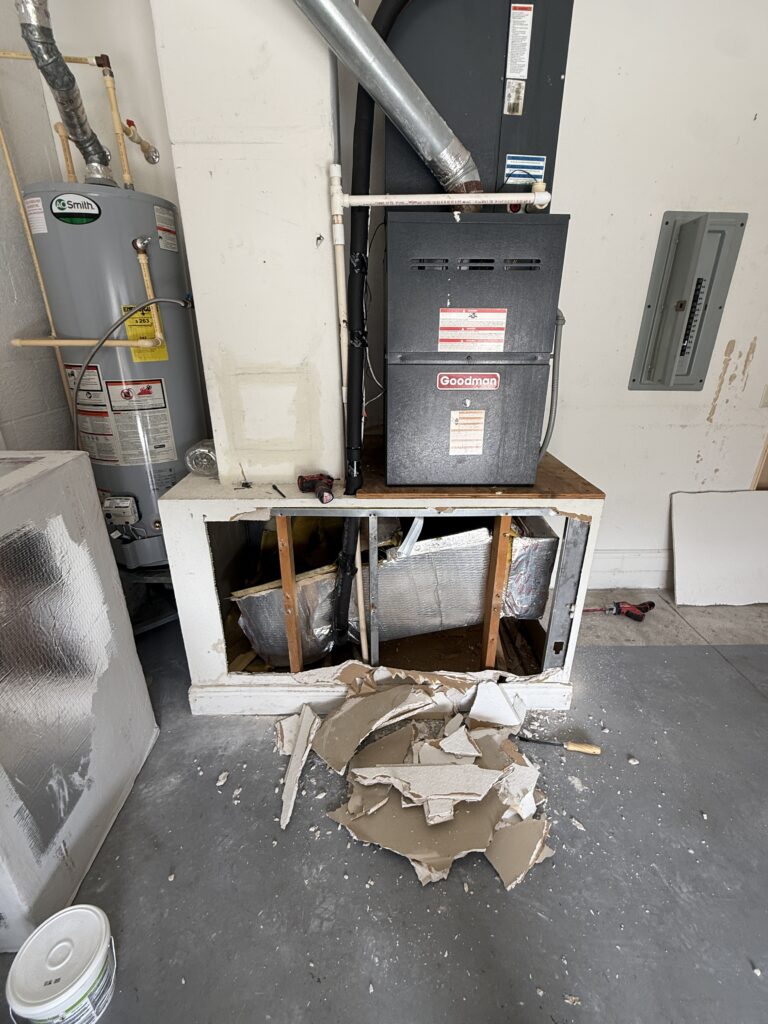
A rattling or vibrating sound suggests that something has come loose. Your furnace vibrates slightly when it runs, and over years of operation, this vibration can loosen screws, panels, or even internal mounts. A loose panel might seem like a minor annoyance, but it can be a symptom of a larger issue. If the blower wheel is out of balance, it will shake the entire unit violently. This is similar to a washing machine with an unbalanced load. This shaking puts stress on every other part of the system. It can cause refrigerant lines to crack, electrical wires to disconnect, and heat exchangers to fracture. Addressing a rattle early secures the system and prevents this collateral damage.
For those with gas furnaces, a loud boom or bang when the system turns on is a serious red flag. This phenomenon is often called delayed ignition. It happens when the gas builds up in the combustion chamber before the igniter successfully lights it. Instead of a smooth, controlled ignition, you get a small explosion. This mini explosion rattles the equipment and puts immense pressure on the heat exchanger. Over time, this can crack the heat exchanger, which is a critical safety failure. If your furnace sounds like a shotgun going off when it starts, you need to shut it down and call a professional immediately.
Strange Odors Permeating the Home
Your nose is often just as good a diagnostic tool as your ears. Your HVAC system circulates air throughout your entire house. If there is a smell originating from the furnace, it will quickly be distributed to every bedroom and living space. While some odors are temporary and harmless, others act as immediate warnings of safety hazards that require urgent attention. Distinguishing between the two is vital for every homeowner.
The most common smell occurs when you turn your heat on for the first time in the season. You will likely notice a distinct burning smell. This is usually the scent of dust burning off the heating elements or the heat exchanger. Since the unit has sat idle for months, dust has settled on these hot surfaces. When they heat up, the dust incinerates. This smell should be relatively mild and should dissipate within a few hours of operation. If the smell persists for more than a day, or if it is accompanied by smoke, it is no longer a normal startup symptom. It indicates that something else is burning, such as a clogged filter or debris inside the unit.
A scent that resembles burning plastic, rubber, or wax is a serious electrical warning. This odor typically means that a wire’s insulation is melting, a circuit board is frying, or a motor is overheating. Electrical components are designed to carry specific loads. When a part fails or a connection becomes loose, resistance increases. This resistance creates heat, which melts the protective coatings on wires and parts. This is a precursor to an electrical fire. If you smell burning plastic, you should turn the system off at the thermostat and the breaker panel immediately. Do not attempt to run the system again until a professional from Legion Cooling has inspected the electrical compartment.
For homes with natural gas furnaces, the smell of rotten eggs or sulfur is the most critical warning sign of all. Natural gas is odorless in its natural state, but utility companies add a chemical called mercaptan to it. This chemical gives the gas that distinct, repulsive odor so that leaks can be detected. A gas leak is an immediate threat to your safety. It presents an explosion hazard and a health risk. If you detect this smell, do not touch any light switches, do not use your phone inside the house, and do not try to find the leak yourself. Evacuate the home immediately and call the gas company or emergency services from a safe distance.
Another odor to be aware of is a chemical or formaldehyde like smell. This can sometimes indicate a cracked heat exchanger. The heat exchanger is the metal wall that separates the combustion gases from the breathable air in your home. If this wall cracks, exhaust gases can leak into your air supply. While carbon monoxide is odorless, other byproducts of combustion can have a faint chemical scent. A cracked heat exchanger is a non negotiable repair; the furnace must be shut down until the part is replaced because of the carbon monoxide risk.
Short Cycling and Inconsistent Heating
The third major sign involves the performance of the unit itself. You know how your home should feel. You know how long the system typically runs to bring the temperature up. When the furnace starts behaving erratically or fails to maintain a comfortable temperature, it is a sign that internal components are struggling. One of the most common performance issues is known as short cycling.
Want to know the signs your thermostat is failing? Click here for more information.
Short cycling occurs when the furnace turns on, runs for a very short period, and then shuts off before the thermostat setting is reached. It might repeat this process every few minutes. This is incredibly hard on the equipment. The startup phase is the most stressful part of the operation for motors and igniters. Doing it repeatedly causes rapid wear and tear. Short cycling is often a symptom of a safety mechanism being triggered. For example, if your air filter is clogged, airflow is restricted. The heat exchanger or heating elements will overheat rapidly because the air isn’t moving fast enough to cool them down. A safety limit switch detects this overheating and shuts the system down to prevent a fire. Once it cools, it tries again, only to overheat again.
This cycle can also be caused by a faulty flame sensor in gas units. The flame sensor is a simple rod that sits in the fire path. Its job is to confirm that a flame is present. If the sensor is dirty or broken, it will not detect the fire, even if the burners are lit. The computer will think the gas is flowing without a flame, which is dangerous, so it shuts the gas valve immediately. Cleaning a flame sensor is a standard part of maintenance, but if neglected, it leads to a furnace that refuses to stay on.
Inconsistent heating or cold spots in the home are another performance indicator. If your living room is roasting while the back bedrooms are freezing, your system is failing to distribute air correctly. This could be an issue with the blower motor losing power, or it could be a problem with the ductwork. Leaks in the ducts can allow the heated air to escape into the attic before it ever reaches your rooms. Alternatively, the furnace might not be producing enough heat to satisfy the demand of the entire house, which suggests it is undersized or that some of its heating elements have failed.
Finally, you should look at your thermostat habits. If you find yourself constantly adjusting the temperature, turning it up higher and higher trying to get comfortable, the furnace is not doing its job. You should not have to set the thermostat to 80 degrees just to get the room to feel like 72. This disconnect between the setting and the reality means the system has lost its efficiency or capacity. It is running, but it is not doing any actual work. This often shows up in your utility bills as well. A system that runs inefficiently consumes far more energy. If your heating bill spikes unexpectedly, it is often because the system is running longer or working harder to compensate for a mechanical failure.
The furnace is a resilient piece of equipment, but it is not invincible. It requires care, attention, and professional maintenance to operate safely and efficiently, especially in a climate like Winter Garden where it sits idle for so long. The signs of trouble are rarely subtle. The system will warn you with grinding noises, alarming smells, or erratic behavior like short cycling. These are not quirks to be ignored or tolerated. They are clear indicators that components are degrading and safety mechanisms are being tested.
Ignoring these signs does not make the problem go away; it simply allows the damage to spread. A small issue like a dirty flame sensor or a dry bearing is a quick, affordable fix. If left alone, these small issues evolve into cracked heat exchangers, seized motors, and complete system replacements. By paying attention to your furnace and scheduling service when these signs appear, you protect your wallet and your home. Legion Cooling is ready to diagnose these issues and restore the warmth and safety of your home. Do not wait for the system to fail on the coldest night of the year. Listen to your furnace today and ensure it is ready for whatever the winter brings.